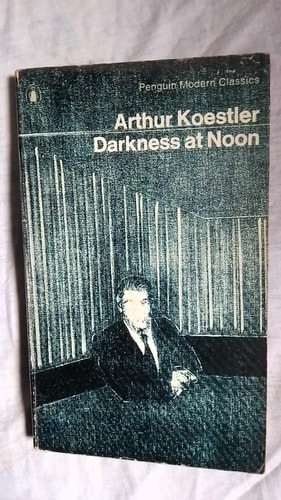
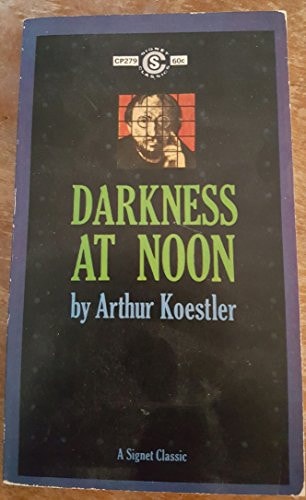
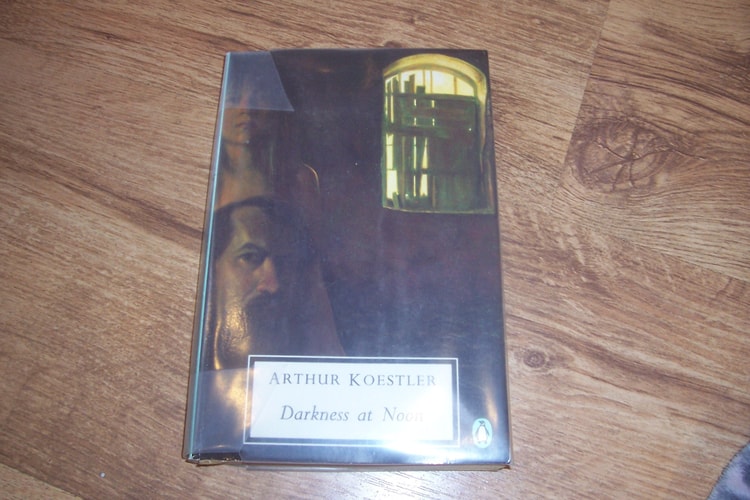
Darkness at Noon
0
0
As an Amazon Associate and affiliate partner, Menrva Books earns from qualifying purchases. Learn more
Author Description
Darkness at Noon (German: Sonnenfinsternis) is a novel by Hungarian-born British novelist Arthur Koestler, first published in 1940. His best known work, it is the tale of Rubashov, an Old Bolshevik who is arrested, imprisoned, and tried for treason against the government that he helped to create. The novel is set in 1939 during the Stalinist Great Purge and Moscow show trials. Despite being based on real events, the novel does not name either Russia or the Soviets, and tends to use generic terms to describe people and organizations: for example the Soviet government is referred to as "the Party" and Nazi Germany is referred to as "the Dictatorship". Joseph Stalin is represented by "Number One", a menacing dictator. The novel expresses the author's disillusionment with the Bolshevik ideology of the Soviet Union at the outset of World War II.
Menrva's Summary
THE PULSE
An aging revolutionary finds himself trapped within the machinery of the very state he helped construct, facing an inevitable confrontation with his own past and the shifting morality of the Party. Rubashov, a veteran of the revolution, is arrested and subjected to a series of grueling interrogations that force him to reconcile his lifelong commitment to the cause with the brutal reality of the current regime. The narrative operates through a claustrophobic lens, alternating between the physical confinement of his prison cell and the internal landscape of his memories. As he navigates the logical traps set by his interrogators, he must decide whether to maintain his ideological loyalty or acknowledge the betrayal of the revolution's original ideals.
INSIDE THE PAGES
- First-person internal monologue reflecting on past political actions
- Non-linear structure incorporating flashbacks to the protagonist's revolutionary career
- Philosophical debates regarding the ethics of ends versus means
- Claustrophobic setting emphasizing the isolation of the prisoner
- Use of allegorical figures to represent historical political entities
- Examination of the psychological toll of state-sanctioned betrayal
- Minimalist prose style that mirrors the austerity of the prison environment
- Exploration of the tension between individual conscience and collective necessity
THE COLLECTIVE ECHO
Readers and critics frequently highlight the novel's clinical precision in dissecting the mechanics of totalitarianism and the erosion of individual identity. Discussion often centers on the intellectual rigor of the dialogues between Rubashov and his interrogators, which serve as a microcosm for the broader conflict between idealism and pragmatism. Many observers note the effectiveness of the atmosphere, which remains tense and oppressive throughout the narrative despite the limited physical scope of the setting. The work is widely regarded as a significant contribution to political literature, with many readers appreciating its ability to articulate the disillusionment of the post-revolutionary era without relying on overt sentimentality.
Page Count:
216
Publication Date:
1971-01-01
Publisher:
Penguin Books
ISBN-10:
0140005390
ISBN-13:
9780140005394
Dystopian
Historical Fiction
Classics
Classic Literature
Psychological
Political fiction
Community Tags
Other Editions(12)









Reader Comments
Share Your Thoughts
No comments yet. Be the first to share your thoughts!