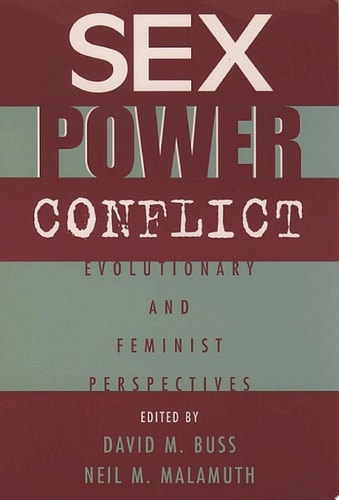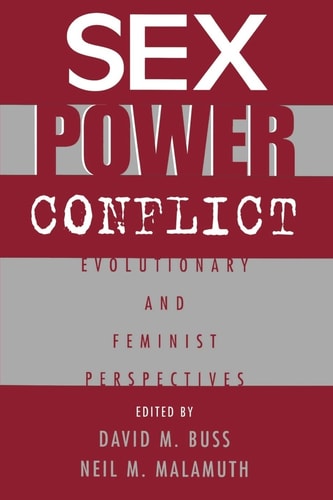
Sex, Power, Conflict: Evolutionary and Feminist Perspectives
0
0
As an Amazon Associate and affiliate partner, Menrva Books earns from qualifying purchases. Learn more
Author Description
Sexual harassment in the workplace, date rape, and domestic violence dominate the headlines and have recently sparked scholarly debates about the nature of the sexes. Concurrently, the scientific community is conducting research in topics of sex and gender issues. Indeed, more research is being done on the topics of sexual conflict and coercion than at any other time in the history of the social sciences. Despite this attention, it is clear that these issues are being addressed from two essentially different perspectives: one is labeled "feminist", while the other, viewed as antithetical to the feminist movement, is called "evolutionary psychology", which emphasizes the history of reproductive strategies in understanding conflict between the sexes. This book brings together leading experts from both sides of the debate in order to discover how each could offer insights lacking in the other. The editors' overall goal is to show how the feminist and evolutionary approaches are complementary despite their evident differences, then provide an integration and synthesis. In fact, several of the contributors to this unique volume consider themselves advocates of both approaches. As a stimulating presentation of the dynamics of sex, power, and conflict--and a pioneering rapprochement of the diverse tendencies within the scientific community-- this book will attract a wide audience in both psychology and women's studies fields.
Menrva's Summary
THE THESIS
This volume investigates whether the seemingly antithetical frameworks of evolutionary psychology and feminist theory can be synthesized to provide a more comprehensive understanding of sexual conflict and coercion. Editors David M. Buss and Neil M. Malamuth curate a collection of essays from leading scholars in both fields to examine the dynamics of sex, power, and conflict. By contrasting reproductive strategy models with sociological and feminist critiques, the text argues that these perspectives are not mutually exclusive but rather complementary in addressing complex social issues like domestic violence and workplace harassment.
THE SCOPE MAP
What You Will Find
- Comparative analysis of evolutionary reproductive strategies and feminist social critiques.
- Examination of high-stakes social issues including date rape, domestic violence, and sexual harassment.
- Multidisciplinary research synthesis from experts in psychology and women's studies.
- Theoretical frameworks for integrating biological and sociological perspectives on gender conflict.
THE AUTHORITY PERSPECTIVE
Experts recognize this text as a significant attempt to bridge the divide between biological and social science disciplines regarding gender dynamics. Readers frequently note that the book provides a balanced, academic exploration of contentious topics, making it a useful resource for students and researchers in both psychology and gender studies.
Page Count:
352
Publication Date:
1996-04-11
Publisher:
Oxford University Press
ISBN-10:
0195103572
ISBN-13:
9780195103571
Psychology
Evolutionary Psychology
Gender Studies
Man-woman relationships
Feminist Theory
Sociology
Sex Psychology
Social Science
Feminism
Community Tags
Similar Books