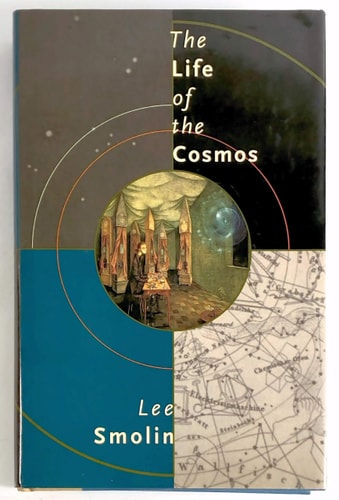
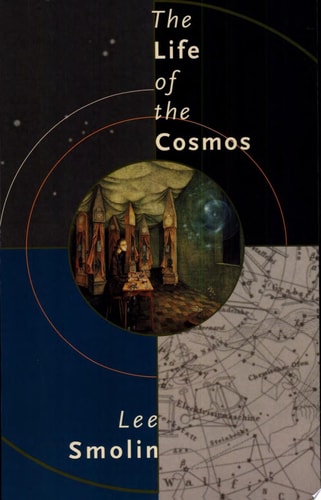
The Life of the Cosmos
0
0
As an Amazon Associate and affiliate partner, Menrva Books earns from qualifying purchases. Learn more
Author Description
We live in the age of a new scientific revolution, one as sweeping and profound as that launched by Copernicus, one that continues to unfold. Beginning at the turn of the century, with the discovery of relativity and quantum mechanics, this second revolution has collapsed the elegant old Newtonian universe. Yet physicists have yet to complete a replacement, as they search for a grand unified theory. Now cosmologist Lee Smolin offers a startling new approach--a theory of the universe that is at once elegant, comprehensive, and radically different from anything proposed before.In The Life of the Cosmos, Smolin cuts the Gordian knot of cosmology with a simple, powerful idea: "The underlying structure of our world," he writes, "is to be found in the logic of evolution." Today's physicists, he writes, have overturned Newton's view of the universe, yet they continue to cling to an understanding of reality not unlike Newton's own--as a clock, an intricate yet static mechanism. Smolin sees the very fabric of reality as changing and developing. "The laws of nature themselves," he argues, "like the biological species, may not be eternal categories, but rather the creations of natural processes occurring in time." A process of self organization like that of biologal evolution shapes the universe, as it develops and eventually reproduces through black holes, each of which may result in a new big bang and a new universe. Natural selection may guide the appearance of the laws of physics, favoring those universes which best reproduce. Smolin's ideas are based on recent developments in cosmology, quantum theory, relativity and string theory, yet they offer, at the same time, a completely new view of how these developments may fit together to form a new theory of cosmology. The result will be a cosmology according to which the fact that the universe is a home to life will be seen to be a natural consequence of the fundamental principles on which it has been built.
Menrva's Summary
THE THESIS
Can the fundamental laws of physics be explained through a process of natural selection similar to biological evolution? Lee Smolin, a theoretical physicist, challenges the static Newtonian view of the universe by proposing that physical laws are not eternal, but rather evolve over time. By integrating concepts from quantum mechanics, relativity, and string theory, Smolin argues that universes reproduce through black holes, creating a cosmic population that favors the emergence of life-sustaining conditions.
THE SCOPE MAP
What You Will Find
- A theoretical framework for cosmological natural selection.
- Analysis of black hole dynamics as mechanisms for universe reproduction.
- Synthesis of quantum theory, general relativity, and string theory.
- Philosophical arguments regarding the mutability of physical laws.
THE AUTHORITY PERSPECTIVE
Experts and readers often note the ambitious scope of Smolin's proposal, which bridges the gap between biological evolutionary theory and theoretical physics. While the text is accessible to those with a background in science, it remains a dense and provocative work that continues to spark debate within the cosmological community.
Page Count:
368
Publication Date:
1997-05-01
Publisher:
Oxford University Press
ISBN-10:
019510837X
ISBN-13:
9780195108378
Science
Evolutionary Biology
Cosmology
Physics
Community Tags
Other Editions(6)
Similar Books



Reader Comments
Share Your Thoughts
No comments yet. Be the first to share your thoughts!