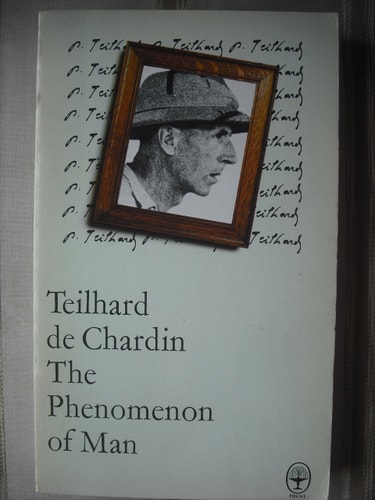
The Phenomenon of Man
0
0
As an Amazon Associate and affiliate partner, Menrva Books earns from qualifying purchases. Learn more
Author Description
If this book is to be properly understood, it must be read not as a work on metaphysics, still less as a sort of theological essay, but purely and simply as a scientific treatise. The title itself indicates that. The book deals with man solely as a phenomenon; but it also deals with the whole phenomenon of man.In the first place, it deals with man solely as a phenomenon. The pages which follow do not attempt to give an explanation of the world, but only an introduction to such an explanation. Put quite simply, what I have tried to do is this; I have chosen man as the centre, and around him I have tried to establish a coherent order between antecedents and consequents. I have not tried to discover a system of ontological and causal relations between the elements of the universe, but only an experimental law of recurrence which would express their successive appearance in time. Beyond these first purely scientific reflections, there is obviously ample room for farther-reaching speculations of the philosopher and the theologian. Of purpose, I have at all times carefully avoided venturing into that field of the essence of being. At most I am confident that, on the plane of experience, I have identified with some accuracy the combined movement towards unity, and have marked the places where philosophical and religious thinkers, in pursuing the matter further, would be entitled, for reasons of a higher order, to look for breaches of continuity.But this book also deals with the whole phenomenon of man. Without contradicting what I have just said (how-ever much it may appear to do so) it is this aspect which might possibly make my suggestion look like a philosophy. During the last fifty years or so, the investigations of science have proved beyond all doubt that there is no fact which exists in pure isolation, but that every experience, however objective it may seem, inevitably becomes enveloped in a complex of assumptions as soon as the scientist
Menrva's Summary
THE THESIS
Pierre Teilhard de Chardin investigates the core question of whether human existence can be understood as a coherent, scientific phenomenon within the broader evolution of the universe. The author, a Jesuit priest and paleontologist, synthesizes his background in geology and theology to propose a framework where humanity represents the culmination of a complex, directional movement toward unity. He argues that by observing the history of life as a series of successive appearances in time, one can identify an experimental law of recurrence that places man at the center of a unified cosmic process.
THE SCOPE MAP
What You Will Find
- A comprehensive framework for viewing human evolution as a continuous, non-isolated phenomenon.
- The concept of the 'Omega Point' as the ultimate destination of cosmic complexity.
- An interdisciplinary methodology blending paleontological data with philosophical inquiry.
- A systematic analysis of the transition from biological evolution to psychosocial development.
THE AUTHORITY PERSPECTIVE
The work is regarded as a dense, ambitious synthesis that challenges the traditional boundaries between empirical science and metaphysical speculation. Its reception remains polarized, with some scholars praising its visionary scope while others criticize its departure from strictly verifiable scientific methodology.
Page Count:
0
Publication Date:
1977-01-01
Publisher:
Collins
ISBN-10:
0006248365
ISBN-13:
9780006248361
Science
Philosophy
Science & Math
Cosmology
Anthropology
Theology
SCIENCE Astronomy
Evolutionary Biology