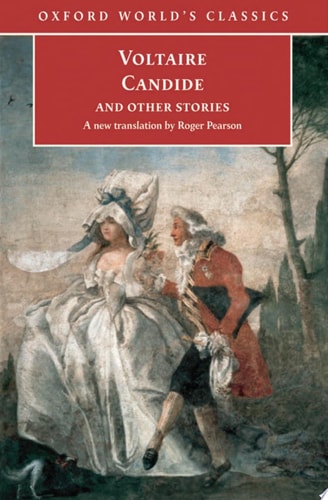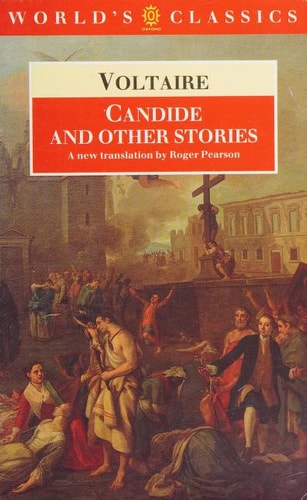
Candide and Other Stories
0
0
As an Amazon Associate and affiliate partner, Menrva Books earns from qualifying purchases. Learn more
Author Description
Candide, the wittiest and best-loved book of a genius who is still unequaled in his ability to spin art out of philosophy, became a huge bestseller in Europe after it was published in 1759. Voltaire, skeptical of the systems of philosophy that were floated about to explain the workings of the world, used this satirical story about the optimist Candide and his friend Dr. Pangloss to interrogate and discredit the philosophies and approach more closely the truth about human life, suffering, and happiness in the real world. Now, the short novel Candide is considered one of the most important texts of the enlightenment.
Menrva's Summary
THE PULSE
The naive protagonist Candide is expelled from his sheltered existence, forcing him to confront the harsh realities of a world that contradicts his tutor's optimistic philosophy. Candide seeks to reunite with his beloved Cunégonde while navigating a series of global catastrophes, wars, and personal misfortunes. His objective remains the pursuit of a stable life, yet he is constantly thwarted by the cruelty of human nature and the absurdity of social institutions. The narrative employs a fast-paced, picaresque structure, utilizing irony and hyperbole to dismantle the prevailing intellectual optimism of the eighteenth century.
INSIDE THE PAGES
- Picaresque narrative structure featuring rapid geographic shifts
- Sharp satirical critique of Leibnizian optimism
- Use of caricature to represent philosophical archetypes
- Episodic plot progression driven by misfortune
- Philosophical dialogue embedded within comedic scenarios
- Third-person omniscient perspective
- Focus on the contrast between theory and lived experience
- Concise, witty prose style characteristic of Enlightenment literature
THE COLLECTIVE ECHO
Readers and critics frequently highlight the work's enduring relevance due to its biting wit and philosophical depth. Discussion often centers on the tension between Pangloss's blind optimism and the grim reality Candide encounters throughout his travels. Many observers note that the pacing remains brisk, allowing the satire to land effectively without becoming bogged down in dense academic jargon. The text is widely regarded as a foundational piece of literature that encourages readers to question established dogmas. Scholars often emphasize how the conclusion serves as a pragmatic response to the existential questions posed earlier in the narrative.
Page Count:
384
Publication Date:
1990-11-22
Publisher:
Oxford University Press
ISBN-10:
0192817302
ISBN-13:
9780192817303
Philosophy
Fiction
Satire
classic
Enlightenment