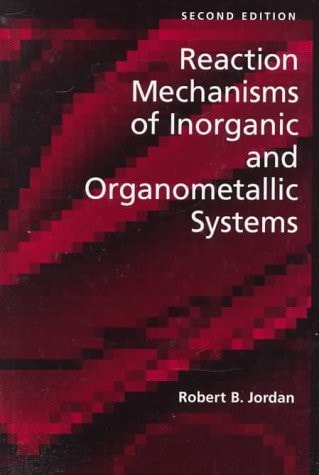
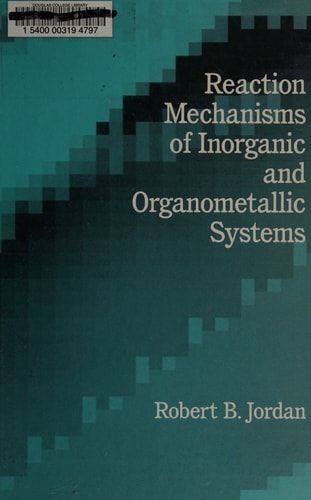
Reaction Mechanisms of Inorganic and Organometallic Systems
0
0
As an Amazon Associate and affiliate partner, Menrva Books earns from qualifying purchases. Learn more
Author Description
Ideal for one semester courses at the advanced undergraduate or graduate level, the second edition of Reaction Mechanisms of Inorganic and Organometallic Systems helps students develop both an appreciation of and skepticism about mechanistic studies. This new edition simplifies the first two chapters, which concentrate on the real world of collecting and interpreting kinetic data, to make them easily understandable to students with minimal exposure to the basics of kinetics. Subsequent chapters cover ligand substitution mechanisms, stereochemical change and fluxional processes, mechanisms of organometallic reactions, electron transfer reactions, inorganic and organometallic photochemistry, selected bioinorganic systems, and experimental methods. The second edition adds sections on the numerical solution of differential equations; the isomerization of square planar systems; the aqueous and bioinorganic chemistry of nitric oxide; and a new chapter on experimental methods.Reaction Mechanisms of Inorganic and Organometallic Systems also offers unique coverage of several topics, including extensive information on solvent exchange reactions; mechanistic interpretation of activation volumes; application of orbital symmetry rules to fluxional organometallic systems; C-H bond activation mechanisms; intervalence electron transfer and its relationship to bridged electron transfer; and flash photolysis applications in photochemistry. The text includes over 900 references to original literature (updated through 1996) and provides sample problems for each chapter.
Menrva's Summary
THE THESIS
This text investigates the fundamental principles and experimental methodologies required to interpret reaction mechanisms in inorganic and organometallic systems. Robert B. Jordan provides a structured framework for advanced undergraduate and graduate students to analyze kinetic data and mechanistic pathways. The book synthesizes theoretical concepts with practical applications, emphasizing the critical evaluation of chemical evidence through a comprehensive review of literature and experimental techniques.
THE SCOPE MAP
What You Will Find
- Kinetic data collection and interpretation methodologies
- Ligand substitution and stereochemical change mechanisms
- Electron transfer reactions and inorganic photochemistry
- Bioinorganic systems and nitric oxide chemistry
- Numerical solutions for differential equations in kinetics
- Orbital symmetry applications in organometallic fluxional processes
THE AUTHORITY PERSPECTIVE
Experts and educators recognize this text as a standard reference for students transitioning into advanced chemical research. Readers frequently note the academic density of the prose, which is balanced by extensive literature citations and practical problem sets for classroom application.
Page Count:
384
Publication Date:
1998-02-12
Publisher:
Oxford University Press
ISBN-10:
0195115554
ISBN-13:
9780195115550
Science
Chemical reaction Conditions and laws of
textbook
Chemistry
Chemistry inorganic
Inorganic Chemistry
Inorganic compounds
Community Tags
Other Editions(4)
Similar Books
Reader Comments
Share Your Thoughts
No comments yet. Be the first to share your thoughts!