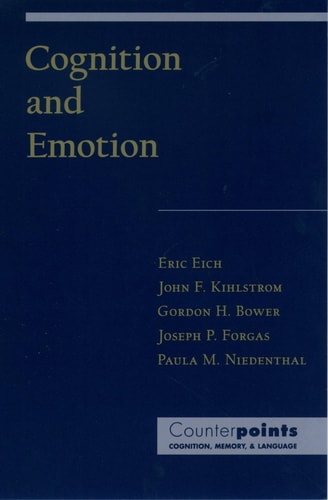
Cognition and Emotion
0
0
As an Amazon Associate and affiliate partner, Menrva Books earns from qualifying purchases. Learn more
Author Description
Recent years have witnessed a revival of research in the interplay between cognition and emotion. The reasons for this renaissance are many and varied. In the first place, emotion theorists have come to recognize the pivotal role of cognitive factors in virtually all aspects of the emotion process, and to rely on basic cognitive factors and insight in creating new models of affective space. Also, the successful application of cognitive therapies to affective disorders has prompted clinical psychologists to work towards a clearer understanding of the connections between cognitive processes and emotional problems. And whereas the cognitive revolutionaries of the 1960s regarded emotions with suspicion, viewing them as nagging sources of "hot" noise in an otherwise cool, rational, and computer-like system of information processing, cognitive researchers of the 1990s regard emotions with respect, owing to their potent and predictable effects on tasks as diverse as object perception, episodic recall, and risk assessment. These intersecting lines of interest have made cognition and emotion one of the most active and rapidly developing areas within psychological science. Written in debate format, this book covers developing fields such as social cognition, as well as classic areas such as memory, learning, perception and categorization. The links between emotion and memory, learning, perception, categorization, social judgements, and behavior are addressed. Contributors come from the U.S., Canada, Australia, and France.
Menrva's Summary
THE THESIS
This volume investigates the complex, bidirectional relationship between cognitive processes and emotional states, challenging the historical view of emotions as mere interference in rational thought. The authors, a group of distinguished researchers in psychological science, synthesize decades of experimental data to argue that emotion is a fundamental component of information processing. By examining how affective states influence perception, memory, and social judgment, the text provides a framework for understanding the integration of 'hot' emotional responses with 'cool' cognitive systems.
THE SCOPE MAP
What You Will Find
- Analysis of the interplay between emotion and cognitive functions such as memory, learning, and categorization.
- Examination of social cognition and its susceptibility to affective influence.
- Application of cognitive-emotional models to clinical psychology and affective disorders.
- A structured debate format presenting diverse perspectives from international experts in the field.
THE AUTHORITY PERSPECTIVE
Experts recognize this work as a foundational text for understanding the shift in psychological research during the 1990s toward integrating affective science. Readers frequently note the academic density of the prose, which serves as a comprehensive resource for students and professionals in the behavioral sciences.
Page Count:
259
Publication Date:
2000-08-15
Publisher:
Oxford University Press
ISBN-10:
0195113349
ISBN-13:
9780195113341
Psychology
Neuroscience
Academic
Cognition
Community Tags
Similar Books