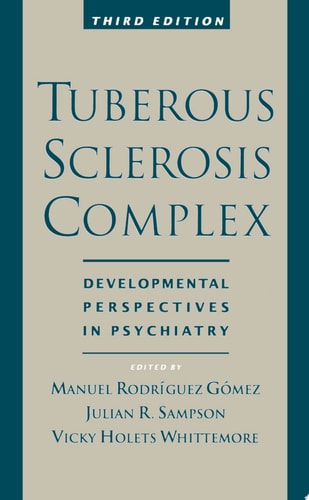
Tuberous Sclerosis Complex: Developmental Perspectives in Psychiatry
0
0
As an Amazon Associate and affiliate partner, Menrva Books earns from qualifying purchases. Learn more
Author Description
Tuberous Sclerosis is a genetic disease characterized by lesions of the skin and central nervous system, seizures, and sometimes sever mental retardation. Infants with this disease may appear overactive, autistic, or socially impaired. Because tuberous sclerosis involves abnormal cellular differentiation, aberrant neuronal migration, and excessive cell proliferation, this thoroughly revised edition will be of interest to a wide range of professionals involved in the study of biological mechanisms underlying many genetically determined neurological disorders.
Menrva's Summary
THE THESIS
This volume investigates the complex biological and neurological mechanisms underlying Tuberous Sclerosis Complex (TSC) and its manifestations in human development. The authors, Julian R. Sampson, Manuel Rodriguez Gomez, and Vicky Holets Whittemore, synthesize clinical observations with genetic research to provide a comprehensive framework for understanding how this disorder impacts cellular differentiation and neuronal migration. By bridging the gap between molecular biology and psychiatric presentation, the text serves as a technical resource for clinicians and researchers examining genetically determined neurological conditions.
THE SCOPE MAP
What You Will Find
- Detailed analysis of cellular differentiation and aberrant neuronal migration patterns.
- Clinical correlations between genetic mutations and neurological symptoms such as seizures and cognitive impairment.
- Examination of behavioral phenotypes including autism and social impairment in pediatric patients.
- Synthesis of current research regarding the biological mechanisms of central nervous system lesions.
THE AUTHORITY PERSPECTIVE
Experts recognize this text as a specialized reference for professionals working within the fields of pediatric neurology and genetic psychiatry. Readers frequently note the technical density of the prose, which assumes a foundational understanding of biological and clinical terminology.
Page Count:
340
Publication Date:
1999-07-15
Publisher:
Oxford University Press
ISBN-10:
0195122100
ISBN-13:
9780195122107
Science
Developmental Psychology
Medical
Psychiatry
Genetics
Neurology
Community Tags
Similar Books