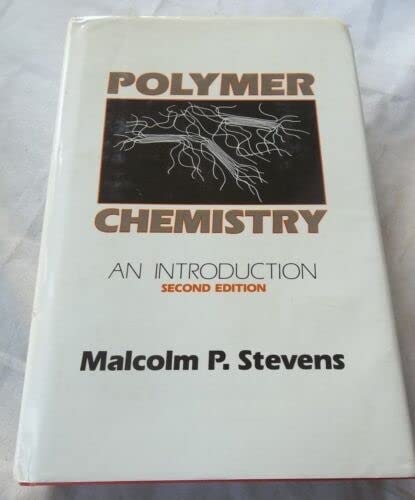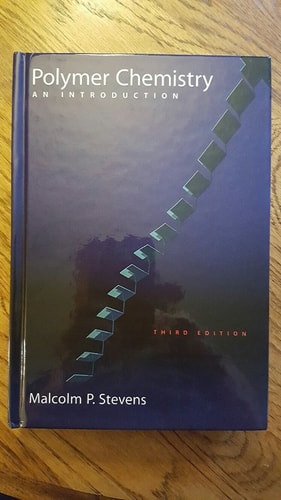
Polymer Chemistry: An Introduction
0
0
As an Amazon Associate and affiliate partner, Menrva Books earns from qualifying purchases. Learn more
Author Description
Now updated to incorporate recent developments in the field, the third edition of this successful text offers an excellent introduction to polymer chemistry. Ideal for graduate students, advanced undergraduates, and industrial chemists who work with polymers, it is the only current polymer textbook that discusses polymer types according to functional groups. It provides a comprehensive and up-to-date overview of the chemistry of macromolecular substances, with particular emphasis on polymers that are important commercially and the properties that make them important. Major topics include polymer synthesis and nomenclature; molecular weight and molecular weight distribution; reactions of polymers; recycling of polymers; methods used for characterizing and testing polymers; morphology; stereoregular polymers; polymer blends; step-growth, chain-growth, and ring-opening polymerization; commercially important addition and condensation polymers; and heterocyclic, inorganic, and natural polymers. Review exercises, many including journal references, are provided to help lead students into the polymer literature.Polymer Chemistry, 3/e, offers the most up-to-date treatment available of new developments in this rapidly changing field. It covers dendritic and hyperbranched polymers, olefin polymerization using metallocene catalysts, living free radical polymerization, biodegradable bacterial polyesters, mass spectrometric methods for determining molecular weights of polymers, atomic force microscopy for characterizing polymer surfaces, and polymers exhibiting nonlinear optical properties.
Menrva's Summary
THE THESIS
This text investigates the fundamental principles and modern advancements in polymer chemistry to provide a comprehensive framework for understanding macromolecular substances. Malcolm P. Stevens utilizes his academic background to synthesize complex chemical concepts into a structured pedagogical format. The book organizes polymer types by functional groups, allowing students and professionals to navigate the relationship between chemical structure and material properties. It serves as a bridge between theoretical chemistry and industrial application by incorporating recent developments in synthesis and characterization techniques.
THE SCOPE MAP
What You Will Find
- Detailed analysis of polymer synthesis, nomenclature, and molecular weight distribution.
- Methodologies for characterizing and testing polymers, including atomic force microscopy and mass spectrometry.
- Coverage of advanced topics such as metallocene catalysts, living free radical polymerization, and dendritic polymers.
- Practical review exercises and references to primary scientific literature for further study.
THE AUTHORITY PERSPECTIVE
Experts and educators recognize this text as a foundational resource for advanced undergraduates and graduate students due to its unique functional group approach. Readers frequently note the academic density of the prose, which effectively balances theoretical rigor with industrial relevance.
Page Count:
576
Publication Date:
1998-11-19
Publisher:
Oxford University Press
ISBN-10:
0195124448
ISBN-13:
9780195124446
Science
textbook
Chemistry
Polymerization
Materials Science
Polymers