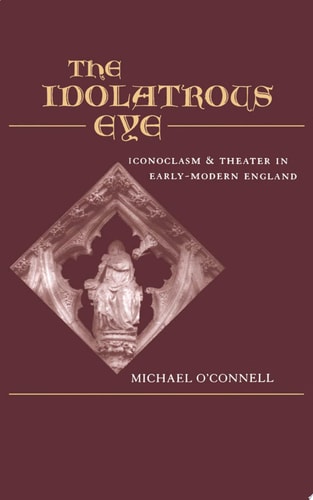
The Idolatrous Eye: Iconoclasm and Theater in Early-Modern England
0
0
As an Amazon Associate and affiliate partner, Menrva Books earns from qualifying purchases. Learn more
Author Description
This study argues that the century after the Reformation saw a crisis in the way that Europeans expressed their religious experience. Focusing specifically on how this crisis affected the drama of England, O'Connell shows that Reformation culture was preoccupied with idolatry and that the theater was frequently attacked as idolatrous. This anti-theatricalism notably targeted the traditional cycles of mystery plays--a type of vernacular, popular biblical theater that from a modern perspective would seem ideally suited to advance the Reformation project. The Idolatrous Eye provides a wide perspective on iconoclasm in the sixteenth century, and in so doing, helps us to understand why this biblical theater was found transgressive and what this meant for the secular theater that followed.
Menrva's Summary
THE THESIS
This study investigates the complex relationship between Reformation-era iconoclasm and the perceived idolatry of the theater in early-modern England. Michael O'Connell examines how the religious anxieties of the sixteenth century fundamentally reshaped cultural expression and artistic production. By analyzing the tension between Protestant theology and traditional performance, the author argues that the suppression of mystery plays was a direct consequence of a broader cultural crisis regarding visual representation and religious devotion.
THE SCOPE MAP
What You Will Find
- Analysis of the Reformation's impact on vernacular biblical theater and mystery cycles.
- Examination of anti-theatrical rhetoric and its theological foundations in sixteenth-century England.
- Historical investigation into the transition from religious performance to secular drama.
- Discussion of the cultural preoccupation with idolatry and the visual arts.
THE AUTHORITY PERSPECTIVE
Scholars frequently cite this work as a significant contribution to the study of early-modern performance culture and religious history. Experts highlight the text for its nuanced exploration of how theological shifts directly influenced the development of secular dramatic traditions.
Page Count:
208
Publication Date:
2000-01-13
Publisher:
Oxford University Press
ISBN-10:
019513205X
ISBN-13:
9780195132052
Religion
History
Literary Criticism
Great Britain
Theater History
Renaissance
Community Tags
Similar Books