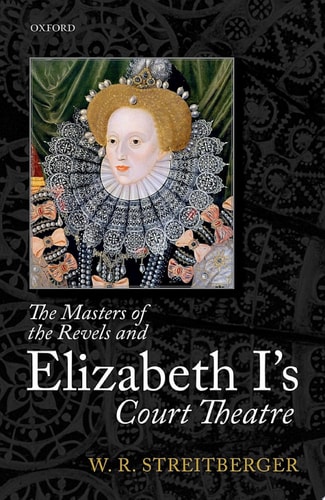
The Masters of the Revels and Elizabeth I's Court Theatre
0
0
As an Amazon Associate and affiliate partner, Menrva Books earns from qualifying purchases. Learn more
Author Description
The Masters of the Revels and Elizabeth I's Court Theatre places the Revels Office and Elizabeth I's court theatre in a pre-modern, patronage and gift-exchange driven-world of centralized power in which hospitality, liberality, and conspicuous display were fundamental aspects of social life. W.R. Streitberger reconsiders the relationship between the biographies of the Masters and the conduct of their duties, rethinking the organization and development of the Office, re-examining its productions, and exploring its impact on the development of the commercial theatre. The nascent capitalist economy that developed alongside and interpenetrated the gift-driven system that was in place during Elizabeth's reign became the vehicle through which the Revels Office along with the commercial theatre was transformed. Beginning in the early 1570s and stretching over a period of twenty years, this change was brought about by a small group of influential Privy Councillors. When this project began in the early 1570s the Queen's revels were principally in-house productions, devised by the Master of the Revels and funded by the Crown. When the project was completed in the late 1590s, the Revels Office had been made responsible for plays only and put on a budget so small that it was incapable of producing them. That job was left to the companies performing at court. Between 1594 and 1600, the revels consisted almost entirely of plays brought in by professional companies in the commercial theatres in London. These companies were patronized by the queen's relatives and friends and their theatres were protected by the Privy Council. Between 1594 and 1600, for example, all the plays in the revels were supplied by the Admiral's and Chamberlain's Players which included writers such as Shakespeare, and legendary actors such as Edward Alleyn, Richard Burbage, and Will Kempe. The queen's revels essentially became a commercial enterprise, paid for by the ordinary Londoners who came to see these
Menrva's Summary
THE THESIS
This work investigates how the Revels Office and Elizabethan court theater transitioned from a patronage-based, gift-exchange system to a commercialized enterprise under the influence of Privy Councillors. W. R. Streitberger, a scholar of early modern drama, utilizes archival evidence and biographical analysis of the Masters of the Revels to map this institutional evolution. He argues that the fiscal restructuring of the office between the 1570s and 1590s fundamentally altered the relationship between the Crown and professional acting companies.
THE SCOPE MAP
What You Will Find
- Analysis of the administrative structure of the Revels Office.
- Biographical studies of the Masters of the Revels.
- Examination of the economic shift from Crown-funded productions to commercial theater reliance.
- Contextualization of Elizabethan social practices like hospitality and conspicuous display.
Scope Limits
- The study focuses primarily on the period between the early 1570s and the late 1590s.
- It does not provide a comprehensive history of all Elizabethan drama outside the context of the Revels Office.
THE AUTHORITY PERSPECTIVE
Scholars recognize this text as a rigorous examination of the intersection between administrative history and the development of the commercial stage. Readers frequently note the academic density of the prose and the depth of the archival research presented by the author.
Page Count:
335
Publication Date:
2017-01-01
Publisher:
OUP Oxford
ISBN-10:
0192552287
ISBN-13:
9780192552280
History
Theater History
Cultural History
English
Great Britain
English & College Success
British History
Community Tags
Other Editions(3)


Similar Books




Reader Comments
Share Your Thoughts
No comments yet. Be the first to share your thoughts!