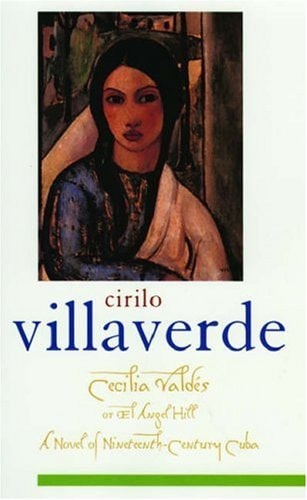
Cecilia Valdés or El Angel Hill
0
0
As an Amazon Associate and affiliate partner, Menrva Books earns from qualifying purchases. Learn more
Author Description
Cecilia Vald'es is arguably the most important novel of 19th century Cuba. Originally published in New York City in 1882, Cirilo Villaverde's novel has fascinated readers inside and outside Cuba since the late 19th century. In this new English translation, a vast landscape emerges of the moral, political, and sexual depravity caused by slavery and colonialism. Set in the Havana of the 1830s, the novel introduces us to Cecilia, a beautiful light-skinned mulatta, who is being pursued by the son of a Spanish slave trader, named Leonardo. Unbeknownst to the two, they are the children of the same father. Eventually Cecilia gives in to Leonardo's advances; she becomes pregnant and gives birth to a baby girl. When Leonardo, who gets bored with Cecilia after a while, agrees to marry a white upper class woman, Cecilia vows revenge. A mulatto friend and suitor of hers kills Leonardo, and Cecilia is thrown into prison as an accessory to the crime.For the contemporary reader Helen Lane's masterful translation of Cecilia Vald'es opens a new window into the intricate problems of race relations in Cuba and the Caribbean. There are the elite social circles of European and New World Whites, the rich culture of the free people of color, the class to which Cecilia herself belonged, and then the slaves, divided among themselves between those who were born in Africa and those who were born in the New World, and those who worked on the sugar plantation and those who worked in the households of the rich people in Havana. Cecilia Vald'es thus presents a vast portrait of sexual, social, and racial oppression, and the lived experience of Spanish colonialism in Cuba.
Menrva's Summary
THE PULSE
The tragic entanglement of Cecilia Valdés and Leonardo Gamboa exposes the corrosive influence of racial and class hierarchies in 1830s Havana. Driven by desire and unaware of their shared paternity, the two protagonists navigate a rigid social structure that ultimately dictates their ruin. The narrative operates as a sweeping social critique, utilizing a third-person perspective to examine the moral decay inherent in a slave-holding society. The story unfolds through a complex interplay of personal obsession and systemic oppression, leading to a violent conclusion that mirrors the instability of the colonial environment.
INSIDE THE PAGES
- Detailed depiction of 19th-century Havana social strata
- Exploration of the intersection between race, class, and colonial power
- Use of the tragic romance trope to highlight systemic injustice
- Extensive focus on the lives of free people of color
- Contrast between urban household life and rural plantation conditions
- Examination of the psychological impact of slavery on both oppressor and oppressed
- Incorporation of historical political tensions within the narrative framework
- Analysis of the moral consequences of hidden lineage and social taboo
THE COLLECTIVE ECHO
Discussion often centers on the novel's status as a foundational text for understanding the complexities of Cuban identity and racial dynamics. Readers frequently highlight the meticulous attention to detail regarding the various social classes, from the elite European circles to the enslaved population. Critics often observe that the pacing serves the broader goal of social documentation, prioritizing a panoramic view of Havana over rapid plot progression. The work is widely recognized for its unflinching portrayal of the sexual and political exploitation that defined the colonial era. Many readers find the tragic trajectory of the characters to be a powerful reflection of the historical forces at play during the 19th century.
Page Count:
544
Publication Date:
2005-09-29
Publisher:
Oxford University Press
ISBN-10:
0195143949
ISBN-13:
9780195143942
Historical Fiction
Classic Literature
English & College Success
Social Realism
Latin American
Colonialism
English
Cuba
Community Tags
Other Editions(2)
Similar Books