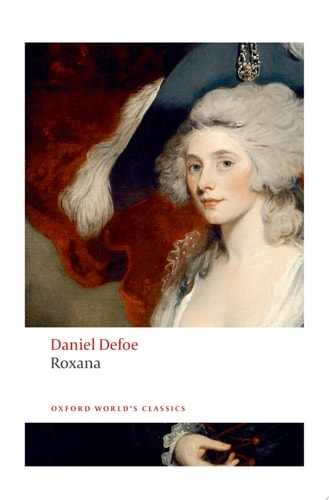
Roxana: The Fortunate Mistress
0
0
As an Amazon Associate and affiliate partner, Menrva Books earns from qualifying purchases. Learn more
Author Description
Roxana (1724), Defoe's last and darkest novel, is the autobiography of a woman who has traded her virtue, at first for survival, and then for fame and fortune. Its narrator tells the story of her own `wicked' life as the mistress of rich and powerful men. A resourceful adventuress, she is also an unforgiving analyst of her own susceptibilities, who tells us of the price she pays for her successes. Endowed with many seductive skills, she is herself seduced: by money, by dreams of rank, and by the illusion that she can escape her own past. Unlike Defoe's other penitent anti-heroes, however, she fails to triumph over these weaknesses. The novel's drama lies not only in the heroine's `vast variety of fortunes', but in her attempts to understand the sometimes bitter lessons of her life as a `Fortunate Mistress'. Defoe's achievement was to invent, in `Roxana', a gripping story-teller as well as a gripping story. This edition uses the rare first edition text, with a new introduction, detailed notes, textual history, and a map. ABOUT THE SERIES: For over 100 years Oxford World's Classics has made available the widest range of literature from around the globe. Each affordable volume reflects Oxford's commitment to scholarship, providing the most accurate text plus a wealth of other valuable features, including expert introductions by leading authorities, helpful notes to clarify the text, up-to-date bibliographies for further study, and much more.
Menrva's Summary
THE PULSE
A woman navigates the precarious social hierarchies of the 18th century by trading her virtue for financial security and status. The protagonist, a resourceful and calculating narrator, recounts her rise from poverty to wealth as the mistress of various powerful men. Her objective is to secure a permanent position of influence, yet she is constantly opposed by the moral consequences of her choices and the persistent threat of her past resurfacing. The narrative is presented as a retrospective autobiography, characterized by the protagonist's cold, analytical assessment of her own moral compromises and the logical constraints of a society that offers few avenues for female independence.
INSIDE THE PAGES
- First-person confessional narrative structure
- Exploration of the intersection between gender, class, and economic survival
- Detailed depiction of 18th-century social mobility and its costs
- Psychological examination of a protagonist who lacks traditional penitence
- Use of the picaresque tradition to critique contemporary morality
- Focus on the tension between public reputation and private reality
- Stylistic emphasis on the narrator's self-justification and rationalization
- Examination of the limitations placed on women within the patriarchal framework
THE COLLECTIVE ECHO
Discussion often centers on the moral ambiguity of the protagonist, who stands apart from other penitent figures in the author's body of work. Readers frequently highlight the stark, unvarnished prose that captures the narrator's pragmatic approach to her own survival. Critics often examine the novel's dark tone, noting how it subverts the expectations of the picaresque genre by denying the heroine a clear moral redemption. The text is widely regarded as a complex study of the psychological toll of ambition and the impossibility of fully escaping one's history. Scholars emphasize the effectiveness of the narrative voice in maintaining a balance between the character's seductive charm and her ruthless self-interest.
Page Count:
400
Publication Date:
2008-01-01
Publisher:
OUP Oxford
ISBN-10:
0192669265
ISBN-13:
9780192669261
Historical Fiction
Classic Literature
Social Commentary
18th century
Picaresque
England
Adventure fiction
English
English & College Success
Community Tags
Other Editions(4)

Similar Books






Reader Comments
Share Your Thoughts
No comments yet. Be the first to share your thoughts!