Fanny Kemble's Civil Wars
0
0
As an Amazon Associate and affiliate partner, Menrva Books earns from qualifying purchases. Learn more
Author Description
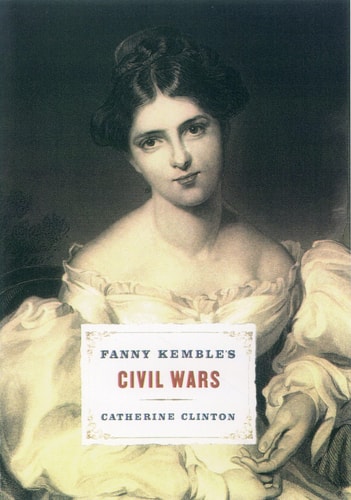
A British stage star turned Georgia plantation mistress, Fanny Kemble is perhaps best remembered as a critic of slavery--and an influential opponent of this institution during the years leading up to the Civil War. By the mid-1830s, American society was firmly in the grip of Kemble's celebrity as an actress--young ladies adopted "Fanny Kemble curls," a tulip was named in her honor, and lecture attendance at Harvard fell so sharply on afternoons of Kemble's matinees that professors threatened to cancel classes. Catherine Clinton's insightful biography chronicles these early portraits of Fanny's life and shows how her role in society changed drastically after her bitter and short-lived marriage to the heir of a Georgia plantation owner, whom she derisively called her "lord and master." We witness the publication of Journal of a Residence on a Georgia Plantation, in which Kemble hauntingly records the "simple horror" and misery she saw among the slaves. The raw power of her words made for an influential anti-slavery tract, which swayed European sentiment toward the Union cause. The book was embraced by Northern critics as "a permanent and most valuable chapter in our history" (Atlantic Monthly). In Fanny Kemble's Civil Wars, Catherine Clinton reveals how one woman's life reflected in microcosm the public battles--over slavery, the role of women, and sectionalism--that fueled our nation's greatest conflict and have permanently marked our history.
Menrva's Summary
THE THESIS
How did the personal life and observations of a prominent British actress serve as a catalyst for shifting public opinion on slavery and sectionalism in the United States? Catherine Clinton, a historian specializing in the American South and women's history, utilizes primary source documents, including Kemble's own journals and correspondence, to analyze the intersection of celebrity culture and political activism. The book argues that Kemble's transition from stage star to plantation mistress provided a unique, critical vantage point that exposed the systemic brutality of slavery to both American and European audiences, ultimately influencing the political climate leading up to the Civil War.
THE SCOPE MAP
What You Will Find
- A detailed examination of the antebellum period and the social influence of celebrity culture in the 1830s.
- An analysis of the impact of Kemble's 'Journal of a Residence on a Georgia Plantation' on international anti-slavery sentiment.
- Primary source evidence drawn from personal diaries, letters, and contemporary journalistic reviews of the era.
- A thematic exploration of the intersection between gender roles, marriage, and the political discourse surrounding the abolitionist movement.
THE AUTHORITY PERSPECTIVE
Historians and critics frequently cite this work as a significant contribution to the study of nineteenth-century social history and the role of women in the abolitionist movement. The text is noted for its accessible narrative style while maintaining rigorous academic standards regarding the historical context of the American Civil War.
Page Count:
304
Publication Date:
2001-12-20
Publisher:
Oxford University Press
ISBN-10:
0195148150
ISBN-13:
9780195148152
History
Biography
United States
Great Britain
Slavery
Civil War
Community Tags
Similar Books