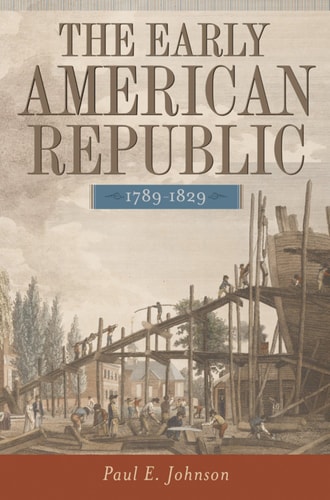
The Early American Republic, 1789-1829
0
0
As an Amazon Associate and affiliate partner, Menrva Books earns from qualifying purchases. Learn more
Author Description
Synthesizing political, social, and cultural aspects of early U.S. history, The Early American Republic, 1789-1829 provides a unique and integrated overview of the era. Focusing on the politics and process of nation-making and the birth of American market society, the book addresses two main subjects. First, it recounts the history of national politics from the presidency of George Washington through the inauguration of Andrew Jackson. During that period, the Founders struggled to make a national republic, then watched as their United States became bigger, more democratic, and more divided than anything they had envisioned. Second, the book describes the beginnings of American market society, demonstrating how many Americans began to organize their lives around earning, buying, and selling. The Early American Republic, 1789-1829 illustrates the formative years of American nationhood, democracy, and free-market capitalism. While most people consider these to be inevitably American, the book demonstrates that none were natural, inevitable, or undisputed in 1789.Examining all aspects of the Early Republic, the book explores such topics as family life, religion, the construction and reconstruction of gender systems, the rise of popular print and other forms of communication, and evolving attitudes toward slavery and race. It also covers the social history of market society, territorial expansion, and the growth of slavery, offering detailed region-, race-, and class-specific considerations of family life and religion. Providing a brief, comprehensive, and clearly written synthesis of American political, economic, social, and cultural development, The Early American Republic, 1789-1829 is ideal for courses in the early national period.
Menrva's Summary
THE THESIS
This work investigates how the United States transitioned from a fragile collection of states into a unified, democratic, and market-driven nation between 1789 and 1829. Paul E. Johnson, a historian specializing in the early American period, utilizes a synthesis of political, social, and cultural data to argue that the foundational elements of American identity—democracy, nationhood, and capitalism—were not inevitable outcomes but rather the result of intense struggle and debate. By examining the period from Washington to Jackson, the author provides a framework that connects high-level political shifts with the evolving daily lives of citizens.
THE SCOPE MAP
What You Will Find
- Analysis of national political developments from the Washington administration through the rise of Andrew Jackson.
- Examination of the emergence of American market society and the shift toward consumer-based living.
- Exploration of social history topics including family structure, religious shifts, and gender roles.
- Detailed considerations of the growth of slavery, territorial expansion, and evolving racial attitudes.
THE AUTHORITY PERSPECTIVE
Historians and educators frequently cite this text as a foundational, accessible synthesis for students of the early national period. Readers often note the clarity of the prose and the author's ability to balance complex political history with broader social and economic trends.
Page Count:
208
Publication Date:
2006-03-02
Publisher:
Oxford University Press
ISBN-10:
0195154231
ISBN-13:
9780195154238
Economics
History
United States
Social History
Community Tags
Other Editions(2)
Similar Books