
The way of the world
0
0
As an Amazon Associate and affiliate partner, Menrva Books earns from qualifying purchases. Learn more
Author Description
LADY. With Mirabell? You call my blood into my face with mentioning that traitor. She durst not have the confidence. I sent her to negotiate an affair, in which if I'm detected I'm undone. If that wheedling villain has wrought upon Foible to detect me, I'm ruined. O my dear friend, I'm a wretch of wretches if I'm detected."In 1700, when The Way of the World was performed on the English stage at Lincoln’s Inn Fields (a new theatre that William Congreve managed), it was not a popular success. This was the last play Congreve was to write, perhaps for that reason. Since that time, however, this play has come to be regarded not only as Congreve’s masterpiece, but as a classic example of the Comedy of Manners. The play is aptly named for two reasons. First, its action takes place in the “present,” which means it reflects the same social period during which the play was originally performed. Second, as a comedy of manners, its purpose is to expose to public scrutiny and laughter the often absurd yet very human passions and follies that characterize social behavior. It therefore transcends its time by holding a mirror to the fashionable world in all of its frivolity and confusion while posing something more precious and sensible as an antidote.As with all comedies of this type, the principle comic material consists of sexual relations and confrontations. Marriages are made for the sake of convenience and tolerated within precise social limits. Affairs are conventional, jealousies abound, lovers are coy, and gallantry is contrived. Dowries are the coin of the marriage realm and therefore they are of central concern in all contracts and adulterous intrigues. Congreve makes clear that the general way of the world may be funny but it is not particularly nice. In the way of all romantic comedies the “marriage of true minds” is finally achieved, but humiliation, cruelty, and villainy are the means by which the action goes forward. His comedy is not intended to remedy the world,
Menrva's Summary
THE PULSE
The central conflict arises when Mirabell and Millamant attempt to secure their marriage and inheritance amidst a web of social intrigue, deception, and the machinations of Lady Wishfort. The protagonist, Mirabell, seeks to navigate the rigid social hierarchies of 18th-century London to win the hand of his beloved, Millamant, while contending with the interference of jealous rivals and the volatile whims of the older generation. The narrative is structured as a five-act play, relying heavily on witty dialogue and complex subplots involving forged letters, secret affairs, and financial contracts. The characters operate within the strict, often cynical constraints of aristocratic society, where reputation and dowries dictate the success of romantic unions.
INSIDE THE PAGES
- Intricate plot involving multiple layers of deception and counter-deception
- Sharp, satirical dialogue characteristic of the Restoration period
- Exploration of the transactional nature of marriage and social status
- Use of stock character archetypes including the fop, the rake, and the meddling elder
- Focus on the tension between individual desire and societal expectation
- Complex, non-linear progression of subplots that converge in the final act
- Emphasis on verbal wit as a primary weapon for social survival
- Examination of the hypocrisy inherent in fashionable London life
THE COLLECTIVE ECHO
Readers and critics frequently highlight the play's dense, sophisticated prose and its biting commentary on the social mores of the late 17th century. Discussion often centers on the complexity of the plot, which many find challenging to follow due to the rapid succession of schemes and counter-schemes. Scholars often point to the character of Millamant as a pinnacle of wit and independence within the genre, noting how her interactions with Mirabell provide a sharp contrast to the surrounding absurdity. The work is widely recognized for its enduring influence on the comedy of manners, with many noting that its cynical view of human behavior remains relevant despite the historical distance. Readers often appreciate the balance between the play's comedic elements and its underlying critique of the transactional nature of human relationships.
Page Count:
124
Publication Date:
1972-01-01
Publisher:
Oliver and Boyd
ISBN-10:
0050024515
ISBN-13:
9780050024515
Drama
Fiction
Satire
Restoration Comedy
Writing Guides
Dramas & Plays
classic
Comedy of Manners
Reference
Community Tags
Other Editions(44)
Repro India Limited
2024
Default edition
Amazon Digital Services LLC - KDP Print US
2021

Independently Published
2020

Independently Published
2020
Bloomsbury UK
2020

Independently Published
2020

Independently Published
2020

Independently Published
2019

Independently Published
2019

Independently Published
2019
Lulu.com
2018

CreateSpace Independent Publishing Platform
2018

CreateSpace Independent Publishing Platform
2018

CreateSpace Independent Publishing Platform
2018

CreateSpace Independent Publishing Platform
2017

CreateSpace Independent Publishing Platform
2016

CreateSpace Independent Publishing Platform
2016

CreateSpace Independent Publishing Platform
2016

CreateSpace Independent Publishing Platform
2016

CreateSpace Independent Publishing Platform
2015

CreateSpace Independent Publishing Platform
2015

CreateSpace Independent Publishing Platform
2014

A&C Black
2014
A&C Black
2014

CreateSpace Independent Publishing Platform
2013
Simon & Schuster
2013

CreateSpace Independent Publishing Platform
2013

Wilder Publications, Incorporated
2012

Bloomsbury Academic
2009

IndyPublish.com
2008
Orient Longman
2007
Kessinger Publishing
2004

IndyPublish.com
2002

Dover Publications
1994
A & C Black
1994
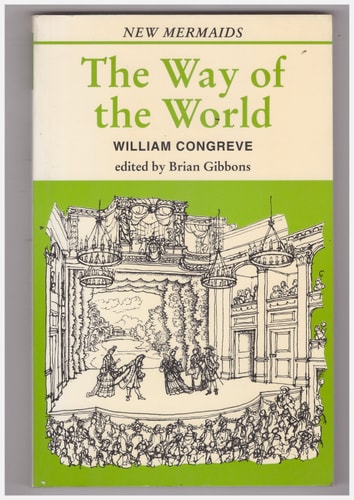
A & C Black
1988
Davis-Poynter
1973
Oliver and Boyd
1972

Benn
1971
E. Arnold
1965

U of Nebraska Press
1965

Appleton-Century-Crofts
1951

Project Gutenberg
1900

CreateSpace Independent Publishing Platform
1800
Similar Books
Reader Comments
Share Your Thoughts
No comments yet. Be the first to share your thoughts!