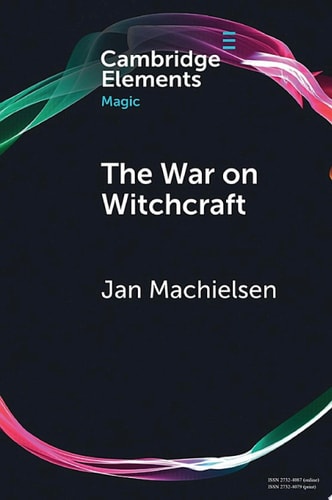
The War on Witchcraft: Andrew Dickson White, George Lincoln Burr, and the Origins of Witchcraft Historiography
0
0
As an Amazon Associate and affiliate partner, Menrva Books earns from qualifying purchases. Learn more
Author Description
Historians of the early modern witch-hunt often begin histories of their field with the theories propounded by Margaret Murray and Montague Summers in the 1920s. They overlook the lasting impact of nineteenth-century scholarship, in particular the contributions by two American historians, Andrew Dickson White (1832–1918) and George Lincoln Burr (1857–1938). Study of their work and scholarly personae contributes to our understanding of the deeply embedded popular understanding of the witch-hunt as representing an irrational past in opposition to an enlightened present. Yet the men's relationship with each other, and with witchcraft sceptics – the heroes of their studies – also demonstrates how their writings were part of a larger war against 'unreason'. This Element thus lays bare the ways scholarly masculinity helped shape witchcraft historiography, a field of study often seen as dominated by feminist scholarship. Such meditation on past practice may foster reflection on contemporary models of history writing.
Menrva's Summary
THE THESIS
This book investigates the overlooked contributions of 19th-century American historians Andrew Dickson White and George Lincoln Burr to the historiography of the early modern witch-hunt. It examines how their scholarship, particularly their focus on witchcraft skeptics, shaped the popular understanding of the witch-hunt as an irrational past contrasted with an enlightened present. The study also explores how their writings, and their relationships with fellow skeptics, reveal a 'war against unreason' and how scholarly masculinity influenced the development of witchcraft historiography, a field often perceived as dominated by feminist scholarship.
THE SCOPE MAP
- Analysis of the scholarly theories of Andrew Dickson White and George Lincoln Burr on the early modern witch-hunt.
- Exploration of the impact of their work, often overlooked in favor of later 20th-century scholarship.
- Examination of how their writings contributed to the perception of the witch-hunt as representing an irrational past.
- Discussion of the relationship between White, Burr, and other witchcraft skeptics.
- Investigation into the concept of a 'war against unreason' as reflected in their scholarship.
- Analysis of the role of scholarly masculinity in shaping witchcraft historiography.
- Consideration of how past historical writing practices can inform contemporary models of history writing.
THE AUTHORITY PERSPECTIVE
This Element offers a focused examination of two pivotal, yet often underappreciated, figures in the study of early modern witch hunts: Andrew Dickson White and George Lincoln Burr. By delving into their 19th-century scholarship, the work highlights their significant impact on how the witch hunt has been historically understood, particularly in framing it as a relic of irrationality. The analysis extends to the social dynamics of historical scholarship, specifically exploring how scholarly masculinity played a role in shaping the field's trajectory. Ultimately, this study prompts a reflection on the evolution of historical writing and its underlying influences.
Page Count:
130
Publication Date:
2021-07-22
Publisher:
Cambridge University Press
ISBN-10:
1108956734
ISBN-13:
9781108956734
Non-Fiction
History
Historiography
Community Tags
Other Editions(2)
Similar Books