Understanding Music
0
0
As an Amazon Associate and affiliate partner, Menrva Books earns from qualifying purchases. Learn more
Author Description
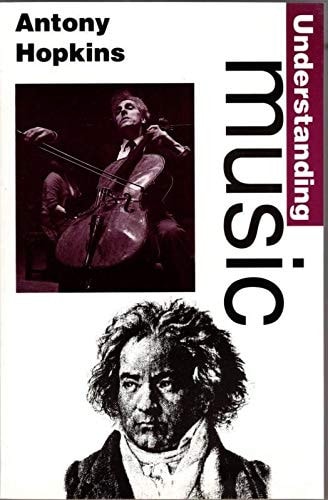
In this prize-winning volume, Antony Hopkins offers an accessible and entertaining introduction to the pleasures of music. He shows how music has developed over the centuries, the ways in which it has been written, and exactly what to listen for in a wide range of musical forms. With his well-known talent for making even the most complex types of music clear to non-musicians, Hopkins begins with the basics--rhythm, harmony, and melody--and then moves on to more advanced topics, such as the key system and the principal musical forms. From preludes and fugues to sonatas, symphonies, and concertos, Hopkins provides a generous number of musical examples to demonstrate how various compositions should be interpreted. And by analyzing representative works by Bach, Mozart, Beethoven, Debussy, and Panufnik, he is able to show how various composers have approached their art, and how music has evolved from the eighteenth century to the present day. Also included are sections on different modes of expression throughout the ages, innovations in instruments, the meaning behind the music, the relationship between words and music in choral works, and a special chapter on approaches to three important works that have been proved especially challenging to listeners: Beethoven's Grosse Fuge, The Rite of Spring by Stravinsky, and Webern's 6 Bagatelles for String Quartet. Appendices include help on more technical aspects of scores, and a ery useful glossary of musical terms.The perfect companion for listeners approaching classical music for the first time, as well as for those who wish to gain further insight into their favorite compositions, Understanding Music is an essential part of any music lover's library.
Menrva's Summary
THE THESIS
This volume investigates the fundamental elements of music and the historical evolution of musical forms to provide listeners with a framework for deeper appreciation. Antony Hopkins, a noted authority on musical communication, utilizes his pedagogical expertise to demystify complex compositions for the layperson. By breaking down technical components like rhythm, harmony, and melody, he constructs a logical progression from basic theory to advanced structural analysis. The text serves as a bridge between casual listening and informed engagement with the classical canon.
THE SCOPE MAP
What You Will Find
- Core theoretical concepts including rhythm, melody, harmony, and the key system.
- Historical analysis of musical development from the eighteenth century to the modern era.
- Detailed examinations of specific forms such as sonatas, symphonies, concertos, and fugues.
- Case studies of challenging works by composers including Beethoven, Stravinsky, and Webern.
- Technical appendices and a comprehensive glossary of musical terminology.
THE AUTHORITY PERSPECTIVE
Experts and music educators frequently cite this work as a foundational text for those seeking to transition from passive listening to active musical analysis. Readers often note the clarity of Hopkins's prose, which successfully renders dense technical concepts accessible without sacrificing academic rigor.
Page Count:
256
Publication Date:
1993-09-02
Publisher:
Oxford University Press
ISBN-10:
019521028X
ISBN-13:
9780195210286
Non-Fiction
Music
Education
Music theory