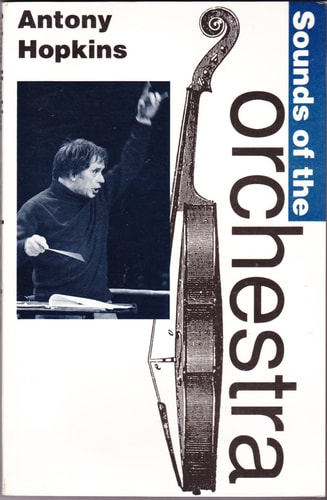
Sounds of the Orchestra
0
0
As an Amazon Associate and affiliate partner, Menrva Books earns from qualifying purchases. Learn more
Author Description
In this remarkable book, Antony Hopkins shows how the entire orchestra acts as a distinct musical instrument, one which composers have played upon over the centuries to express every mood, from the most sublime to the most frivolous. In so doing, he explains the ways in which a composer's "signature in sound" develops, from the subtly exotic pattern of a Bartok theme to the sensuously evocative chords in Debussy.Hopkins offers an in-depth look at the origins of the orchestra itself, an evolutionary process that took the better part of two centuries in Europe, yet finds its roots in our ancient past. He begins his discussion in ancient Egypt, Greece, and Rome, moves through the music of medieval Europe, and ultimately reaches a watershed moment in the history of the orchestra as we now know it: the composition of Bach's Brandenburg Concertos in the early eighteenth century. Having introduced the various instruments, explained the development of their groupings, and demonstrated how the blending of their tones led to the orchestral sounds of the modern era, he provides an incisive examination of actual compositions. Expertly guiding readers through representative pieces by Mozart, Schubert, Berlioz, Tchaikovsky, Debussy, and Britten, Hopkins offers a unique and insightful companion for beginning and more seasoned concert-goers alike.
Menrva's Summary
THE THESIS
This book investigates how the orchestra functions as a singular, complex musical instrument and how composers have utilized its evolving capabilities to define their unique sonic signatures. Antony Hopkins, a noted composer and conductor, draws upon his extensive professional background to analyze the historical development of orchestral groupings. He presents a framework that connects ancient musical roots to the modern era, using specific compositions to illustrate the technical evolution of orchestral sound.
THE SCOPE MAP
What You Will Find
- A historical timeline tracing orchestral origins from ancient Egypt, Greece, and Rome through the medieval period.
- An analysis of the structural development of instrument groupings leading to the modern orchestra.
- Technical examinations of representative works by composers including Mozart, Schubert, Berlioz, Tchaikovsky, Debussy, and Britten.
- A methodology for identifying a composer's unique "signature in sound" through orchestration techniques.
THE AUTHORITY PERSPECTIVE
Experts and musicologists regard this work as an accessible entry point for concert-goers seeking to deepen their technical understanding of orchestral composition. Readers frequently note that Hopkins balances historical breadth with clear, practical explanations of complex musical textures.
Page Count:
176
Publication Date:
1993-09-02
Publisher:
Oxford University Press
ISBN-10:
0195210271
ISBN-13:
9780195210279
Music
Music History
Orchestra
Music theory