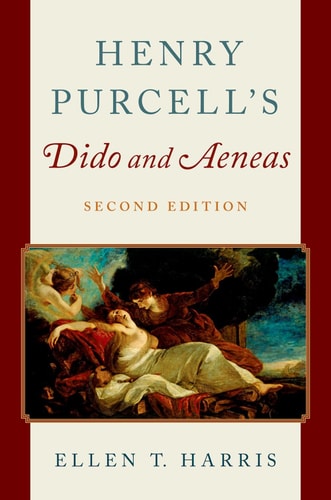
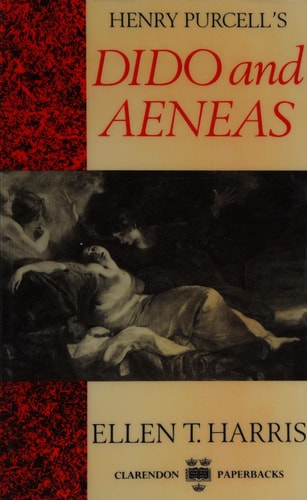
Henry Purcell's Dido and Aeneas
0
0
As an Amazon Associate and affiliate partner, Menrva Books earns from qualifying purchases. Learn more
Author Description
Purcell's Dido and Aeneas stands as the greatest operatic achievement of seventeenth-century England, and yet, despite its global renown, it remains cloaked in mystery. The date and place of its first performance cannot be fixed with precision, and the absolute accuracy of the surviving scores, which date from almost 100 years after the work was written, cannot be assumed.In this thirtieth-anniversary new edition of her book, Ellen Harris closely examines the many theories that have been proposed for the opera's origin and chronology, considering the opera both as political allegory and as a positive exemplar for young women. Her study explores the work's historical position in the Restoration theater, revealing its roots in seventeenth-century English theatrical and musical traditions, and carefully evaluates the surviving sources for the various readings they offer-of line designations in the text (who sings what), the vocal ranges of the soloists, the use of dance and chorus, and overall layout. It goes on to provide substantive analysis of Purcell's musical declamation and use of ground bass.In tracing the performance history of Dido and Aeneas, Harris presents an in-depth examination of the adaptations made by the Academy of Ancient Music at the end of the eighteenth century based on the surviving manuscripts. She then follows the growing interest in the creation of an "authentic" version in the nineteenth and early twentieth centuries through published editions and performance reviews, and considers the opera as an important factor in the so-called English Musical Renaissance.To a significant degree, the continuing fascination with Purcell's Dido and Aeneas rests on its apparent mutability, and Harris shows this has been inherent in the opera effectively from its origin.
Menrva's Summary
THE THESIS
This work investigates the origins, performance history, and structural ambiguities of Henry Purcell's seventeenth-century opera, Dido and Aeneas. Ellen T. Harris, a distinguished musicologist, utilizes a rigorous examination of surviving manuscripts and historical context to address the lack of definitive information regarding the work's premiere and original score. She argues that the opera's enduring significance is tied to its inherent mutability and its role within the broader English musical tradition.
THE SCOPE MAP
What You Will Find
- Analysis of seventeenth-century English theatrical and musical traditions.
- Evaluation of surviving score manuscripts and their reliability.
- Examination of the opera as both political allegory and educational exemplar.
- Detailed study of Purcell's musical declamation and ground bass techniques.
- Historical overview of the Academy of Ancient Music's adaptations.
Scope Limits
- The text does not provide a definitive, singular 'authentic' version of the score, as the author maintains that such a version is historically elusive.
THE AUTHORITY PERSPECTIVE
Scholars and music historians recognize this text as a foundational resource for understanding the complexities of Purcell's most famous work. Readers frequently note the academic density of the prose, which provides a comprehensive and meticulous look at the evolution of the opera's performance history.
Page Count:
272
Publication Date:
2017-12-05
Publisher:
Oxford University Press
ISBN-10:
0190271663
ISBN-13:
9780190271664
Music
Music History
Biographical Studies
Greek drama
Opera
Aeneas Legendary Character
Musicology
Carthage Extinct City
Community Tags
Other Editions(7)
Similar Books

Reader Comments
Share Your Thoughts
No comments yet. Be the first to share your thoughts!