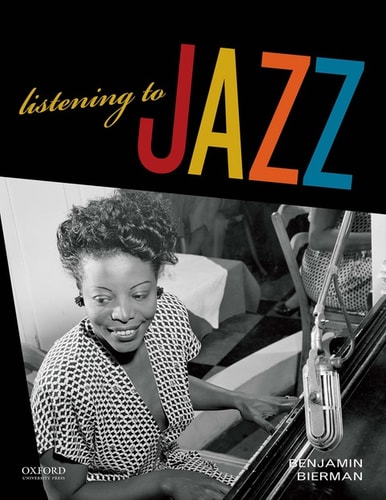
Listening to Jazz
0
0
As an Amazon Associate and affiliate partner, Menrva Books earns from qualifying purchases. Learn more
Author Description
Listening to Jazz offers an engaging introduction to the rich history and culture of jazz. Featuring coverage of all standard periods and genres, this text helps students understand how jazz evolved and how its various styles intersect and blend. A wealth of innovative features, including a series of sidebars, in-depth listening guides, the incorporation of Spanish-Caribbean and women musicians, and historic introductions enhance students' appreciation for this powerful and important genre of music. Distinctive Features * Balanced coverage of jazz history and culture, performance, and listening skills * In-depth "Listening Guide" and "Listening Focus" boxes build students' listening skills on a variety of levels * A full chapter on jazz in the twenty-first century offers the most up-to-date coverage of the current jazz scene * Full treatment of all jazz eras--with coverage of women's and Spanish-Caribbean musicians' contributions to jazz woven throughout * Section overviews provide historical context for the development of jazz and show how cultural/social movements shaped and were shaped by the music * A series of sidebars throughout the text address important subjects: ** "Questions and Controversies" boxes address issues relevant to each period in jazz history ** "Jazz Lives" boxes offer brief biographies of key players, composers, and jazz promoters ** "In Performance" boxes highlight issues faced by working musicians ** "Read All About It" callouts provide references to source readings and critical essays in Robert Walser's anthology, Keeping Time, 2nd Ed., which can be packaged with this text * Downloadable audio, available for purchase separately or in a bundle with the text, offers student access to high-quality recordings of key listening examples. A Spotify playlist will also be available on the companion website.
Menrva's Summary
THE THESIS
This text investigates the evolution, cultural context, and technical components of jazz music to provide a comprehensive framework for student appreciation. Benjamin Bierman utilizes his background in music education to synthesize historical data with performance analysis. The book argues that jazz is a dynamic, intersectional art form shaped by diverse social movements and the contributions of varied demographics, including women and Spanish-Caribbean musicians. It provides a structured approach to listening, moving beyond simple chronology to examine the mechanics of style and cultural influence.
THE SCOPE MAP
What You Will Find
- Comprehensive coverage of all major jazz eras from origins to the twenty-first century
- Structured listening guides and focus boxes designed to build analytical auditory skills
- Biographical sidebars detailing key performers, composers, and promoters
- Integration of social and cultural history alongside musical theory
Scope Limits
- The text does not provide an exhaustive discography of every jazz artist
- Audio recordings are not included within the physical text and require separate purchase or access
THE AUTHORITY PERSPECTIVE
Educators frequently highlight this text as a balanced, accessible entry point for undergraduate music appreciation courses. Experts note that the inclusion of diverse perspectives and contemporary jazz developments makes it a relevant resource for modern curricula.
Page Count:
96
Publication Date:
2016-01-01
Publisher:
Oxford University Press Academic US
ISBN-10:
0190643455
ISBN-13:
9780190643454
Music
Jazz
Music History
textbook
Jazz musicians
Education
Humanities - Music - Jazz
Community Tags
Other Editions(4)


Similar Books


Reader Comments
Share Your Thoughts
No comments yet. Be the first to share your thoughts!