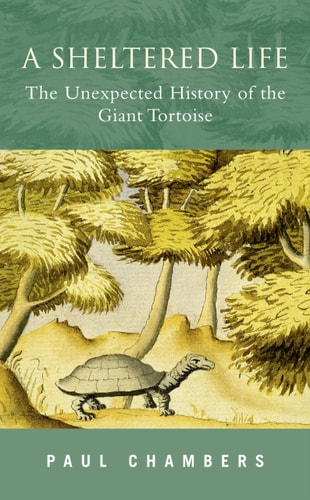
A Sheltered Life: The Unexpected History of the Giant Tortoise
0
0
As an Amazon Associate and affiliate partner, Menrva Books earns from qualifying purchases. Learn more
Author Description
For millennia the mighty giant tortoises lived in isolation on remote oceanic islands such as the Galapagos, Seychelles and Mauritius. Then in the sixteenth century sailors discovered that they were good to eat, and their strategic location led to a wholesale plunder of their population by passing ships.Later, many Victorian scientists became fascinated with these creatures, directly inspiring the first understanding of ecology and biogeography and Darwin's theory of natural selection. The giant tortoise was also the subject of the world's first conservation fight in the 1870s. Indeed many people's lives have been touched by these gentle giants. The French were happy to surrender the island of Mauritius in 1810, but baulked at handing over their mascot tortoise, and the British and American governments were forced to concede the tortoises in a major Cold War incident. The twentieth century saw the establishment of wildlife reserves in the Galapagos and elsewhere, but it has been too late for many species. However, modern genetics has been able to track down members of what were once believed to be extinct populations.A Sheltered Life is a fascinating look at one of the world's strangest and most wondrous animals--whose significance in modern science and culture cannot be underestimated.
Menrva's Summary
THE THESIS
This book investigates the historical, scientific, and cultural significance of the giant tortoise, examining how these isolated creatures became central to human exploration, evolutionary theory, and the birth of modern conservation. Paul Chambers, a science writer, synthesizes historical records, biological data, and anecdotal accounts to trace the impact of these animals on human history. He argues that the giant tortoise is not merely a biological curiosity but a pivotal figure in the development of ecological science and international environmental policy.
THE SCOPE MAP
What You Will Find
- Historical accounts of the exploitation of tortoise populations by maritime explorers and sailors.
- Analysis of the role giant tortoises played in the development of Darwinian natural selection and biogeography.
- Documentation of the first organized conservation efforts in the 1870s.
- Modern genetic research methods used to identify and recover supposedly extinct tortoise lineages.
THE AUTHORITY PERSPECTIVE
Experts and readers alike note the book's accessible blend of natural history and geopolitical narrative. It is frequently cited as a comprehensive resource for those interested in the intersection of colonial history and early environmental science.
Page Count:
320
Publication Date:
2005-11-03
Publisher:
Oxford University Press
ISBN-10:
0195223969
ISBN-13:
9780195223965
History
Science
Nature
Ecology
Zoology
Turtles
Biology
Community Tags
Similar Books