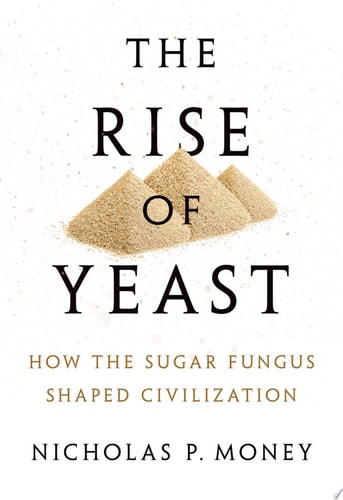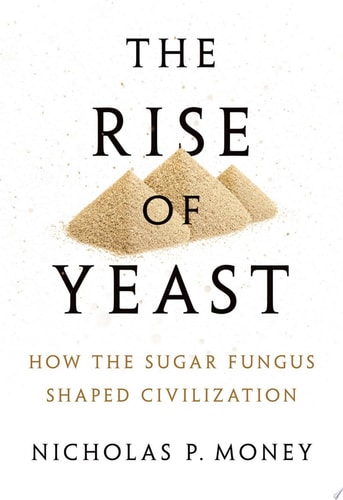
The Rise of Yeast: How the Sugar Fungus Shaped Civilization
0
0
As an Amazon Associate and affiliate partner, Menrva Books earns from qualifying purchases. Learn more
Author Description
The great Victorian biologist Thomas Huxley once wrote, "I know of no familiar substance forming part of our every-day knowledge and experience, the examination of which, with a little care, tends to open up such very considerable issues as does yeast." Huxley was right. Beneath the very foundations of human civilization lies yeast--also known as the sugar fungus. Yeast is responsible for fermenting our alcohol and providing us with bread--the very staples of life. Moreover, it has proven instrumental in helping cell biologists and geneticists understand how living things work, manufacturing life-saving drugs, and producing biofuels that could help save the planet from global warming.In The Rise of Yeast, Nicholas P. Money--author of Mushroom and The Amoeba in the Room--argues that we cannot ascribe too much importance to yeast, and that its discovery and controlled use profoundly altered human history. Humans knew what yeast did long before they knew what it was. It was not until Louis Pasteur's experiments in the 1860s that scientists even acknowledged its classification as a fungus. A compelling blend of science, history, and sociology The Rise of Yeast explores the rich, strange, and utterly symbiotic relationship between people and yeast, a stunning and immensely readable account that takes us back to the roots of human history.
Menrva's Summary
THE THESIS
This book investigates the profound impact of yeast on human civilization, arguing that the controlled use of this sugar fungus fundamentally altered the course of history. Nicholas P. Money, a mycologist and professor, utilizes his expertise in fungal biology to synthesize historical, sociological, and scientific data. He presents a framework that positions yeast not merely as a culinary ingredient, but as a critical biological agent that has driven human development from ancient fermentation practices to modern genetic research.
THE SCOPE MAP
What You Will Find
- Historical analysis of fermentation practices in early human societies
- Scientific explanation of yeast classification and biological function
- Examination of yeast's role in modern medicine, drug manufacturing, and biofuel production
- Biographical context regarding the work of Louis Pasteur
Scope Limits
- The text does not provide a comprehensive technical manual for home brewing or baking
- The narrative focuses primarily on the symbiotic relationship between humans and yeast rather than an exhaustive encyclopedic study of all fungal species
THE AUTHORITY PERSPECTIVE
Experts and readers frequently note the accessibility of the prose, which balances complex biological concepts with engaging historical anecdotes. The book is widely regarded as a clear and informative synthesis for those interested in the intersection of natural history and human civilization.
Page Count:
224
Publication Date:
2018-01-29
Publisher:
Oxford University Press
ISBN-10:
0190270713
ISBN-13:
9780190270711
Science
History
Biology
Yeast
Microorganisms
Food Science
Sociology
Microbiology
Community Tags
Other Editions(3)

Similar Books