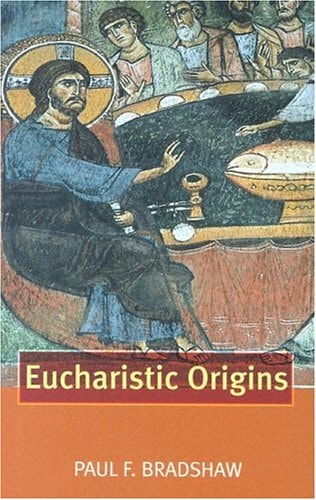
Eucharistic Origins
0
0
As an Amazon Associate and affiliate partner, Menrva Books earns from qualifying purchases. Learn more
Author Description
The consensus view has long been that the Eucharist as practiced in the early Church was modeled primarily on the Last Supper. The meal then disappeared from the rite, and the Eucharist was appended to a morning service of the word inherited from the Jewish synagogue. All of this was supposedly standardized at a very early date, and has remained essentially the same ever since.In this groundbreaking book, Paul Bradshaw explores the basis on which this thesis is built, exposes its weaknesses, and suggests an alternative way of looking at the evidence that leads to a very different vision of eucharistic origins. He carefully examines the principal sources from the first few centuries and finds that although the eucharistic sayings of Jesus did play an important role in shaping the beliefs of early Christians, there was surprising diversity in their practice. Communities differed in the order of the ritual, in the elements used, and in the meanings assigned to it. Bradshaw shows that the Eucharist continued to be associated with an evening meal much longer than previously thought. Likewise, he argues that only gradually did the understanding of the bread and wine as the body and blood of Christ come to predominate.Tracing what can be known--and what cannot--about the celebration of the Eucharist during this formative period of Christianity, Bradshaw sheds important new light on the central rite of the Christian faith.
Menrva's Summary
THE THESIS
This book investigates the historical origins of the Eucharist, challenging the long-held consensus that early Christian practice was a standardized ritual modeled directly on the Last Supper. Paul F. Bradshaw, a noted scholar in liturgical studies, utilizes primary source analysis from the first few centuries of the Christian era to deconstruct traditional narratives. He argues that early eucharistic practice was characterized by significant regional and communal diversity rather than a uniform, early-established rite. By re-examining the evidence, Bradshaw proposes a more nuanced understanding of how the ritual evolved over time.
THE SCOPE MAP
What You Will Find
- Analysis of early Christian liturgical sources from the first through fourth centuries.
- Examination of the evolution of the Eucharist from an evening meal to a morning service.
- Evidence regarding the gradual development of theological interpretations of bread and wine.
- Comparative study of diverse ritual practices across different early Christian communities.
THE AUTHORITY PERSPECTIVE
Scholars and theologians frequently cite this work as a critical intervention in liturgical history that successfully challenges static views of early church development. Readers often note the academic density of the prose, which is intended for those with a background in historical theology or church history.
Page Count:
176
Publication Date:
2004-12-30
Publisher:
Oxford University Press
ISBN-10:
0195222229
ISBN-13:
9780195222227
History
Religion
Lords supper
Christianity
Church History
Theology
Community Tags
Other Editions(4)

Similar Books
Reader Comments
Share Your Thoughts
No comments yet. Be the first to share your thoughts!