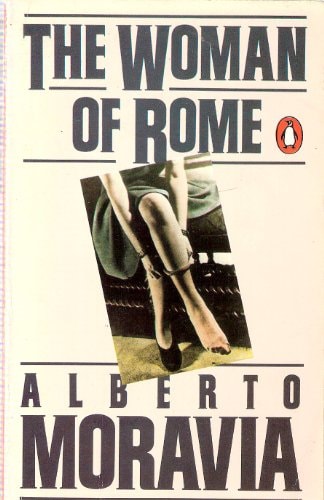
The Woman of Rome
0
0
As an Amazon Associate and affiliate partner, Menrva Books earns from qualifying purchases. Learn more
Author Description
The glitter and cynicism of Rome under Mussolini provide the background of what is probably Alberto Moravia's best and best-known novel -- "The Woman of Rome." It's the story of Adriana, a simple girl with no fortune but her beauty who models naked for a painter, accepts gifts from men, and could never quite identify the moment when she traded her private dream of home and children for the life of a prostitute.One of the very few novels of the twentieth century which can be ranked with the work of Dostoevsky, "The Woman of Rome" also tells the stories of the tortured university student Giacomo, a failed revolutionary who refuses to admit his love for Adriana; of the sinister figure of Astarita, the Secret Police officer obsessed with Adriana; and of the coarse and brutal criminal Sonzogno, who treats Adriana as his private property. Within this story of passion and betrayal, Moravia calmly strips away the pride and arrogance hiding the corrupt heart of Italian Fascism.
Menrva's Summary
THE PULSE
Adriana, a young woman of modest means, navigates the moral decay of Fascist-era Rome as she transitions from a life of innocence to one of professional prostitution. Driven by a desire for stability and domestic fulfillment, Adriana finds herself entangled with a series of men who represent the fractured social and political landscape of Italy. Her narrative, presented through a first-person perspective, chronicles the gradual erosion of her personal agency as she interacts with a failed revolutionary, a corrupt police officer, and a violent criminal. The story operates within the rigid, oppressive atmosphere of Mussolini's regime, where individual choices are constantly constrained by external political forces and personal desperation.
INSIDE THE PAGES
- First-person confessional narrative style
- Detailed examination of the socio-political climate of Fascist Italy
- Character-driven exploration of moral ambiguity
- Focus on the intersection of personal desire and systemic corruption
- Use of archetypal figures to represent societal decay
- Realistic, unvarnished depiction of urban life in Rome
- Psychological depth in the portrayal of the protagonist's passivity
- Thematic focus on the loss of innocence and the commodification of the self
THE COLLECTIVE ECHO
Readers and critics frequently discuss the clinical, detached prose style that Moravia employs to examine the life of his protagonist. Discussion often centers on the parallel between Adriana's personal choices and the broader moral bankruptcy of the Italian Fascist state during the mid-twentieth century. Many observers highlight the effectiveness of the author's character studies, particularly the contrast between the protagonist's simplicity and the complex, often sinister motivations of the men surrounding her. The work is often cited for its ability to maintain a neutral, observational tone while depicting intense themes of betrayal and social alienation. Readers often note that the pacing is deliberate, favoring psychological introspection over rapid plot progression.
Page Count:
384
Publication Date:
1976-10-28
Publisher:
Penguin Books Ltd
ISBN-10:
0140008802
ISBN-13:
9780140008807
Psychological
Italian
Historical
classic
Political
Literary
Contemporary