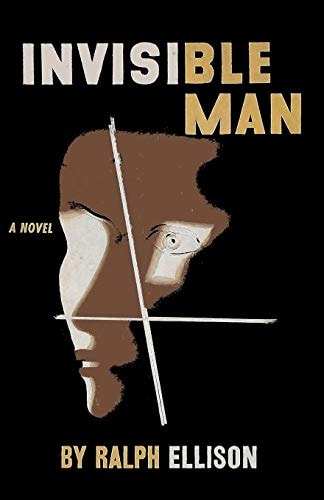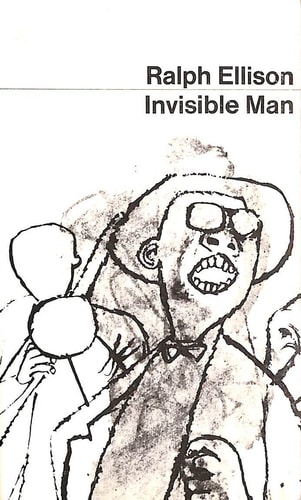
Invisible Man
0
0
As an Amazon Associate and affiliate partner, Menrva Books earns from qualifying purchases. Learn more
Author Description
Invisible Man is the story of a young black man from the South who does not fully understand racism in the world. Filled with hope about his future, he goes to college, but gets expelled for showing one of the white benefactors the real and seamy side of black existence. He moves to Harlem and becomes an orator for the Communist party, known as the Brotherhood. In his position, he is both threatened and praised, swept up in a world he does not fully understand. As he works for the organization, he encounters many people and situations that slowly force him to face the truth about racism and his own lack of identity. As racial tensions in Harlem continue to build, he gets caught up in a riot that drives him to a manhole. In the darkness and solitude of the manhole, he begins to understand himself - his invisibility and his identity. He decides to write his story down (the body of the novel) and when he is finished, he vows to enter the world again.
Menrva's Summary
THE PULSE
A young Black man navigates the treacherous social landscape of mid-20th century America, ultimately retreating into literal and metaphorical invisibility to confront the reality of his existence. Driven by a desire for social mobility and acceptance, the protagonist moves from the American South to Harlem, encountering systemic prejudice and political manipulation at every turn. He attempts to align himself with various ideologies, including the Brotherhood, only to find himself exploited by forces that view him as a tool rather than an individual. The narrative is presented as a first-person account, utilizing a non-linear structure that mirrors the protagonist's internal fragmentation and eventual realization of his own identity.
INSIDE THE PAGES
- First-person retrospective narration
- Surrealist and expressionist imagery
- Exploration of racial identity and social invisibility
- Critique of political organizations and institutional power
- Use of symbolism, including the briefcase and the manhole
- Examination of the American Dream versus reality
- Complex, shifting settings from the rural South to urban Harlem
- Philosophical inquiries into the nature of the self
THE COLLECTIVE ECHO
Readers and critics frequently highlight the novel's dense, symbolic prose and its profound impact on the landscape of 20th-century literature. Discussion often centers on the protagonist's struggle to define himself against the expectations of both white society and Black political movements. Many observers note the effectiveness of the author's use of surrealism to convey the psychological toll of systemic racism. The pacing is often described as deliberate, allowing for deep character introspection that balances the external chaos of the plot. Readers frequently point to the final chapters as a pivotal moment of clarity that recontextualizes the entire narrative arc.
Page Count:
469
Publication Date:
1970-01-01
Publisher:
Penguin Books Ltd
ISBN-10:
0140023356
ISBN-13:
9780140023350
Historical Fiction
Classic Literature
Classics
Contemporary
Bildungsroman
African American
Social Commentary