Budapest: A Cultural History
0
0
As an Amazon Associate and affiliate partner, Menrva Books earns from qualifying purchases. Learn more
Author Description
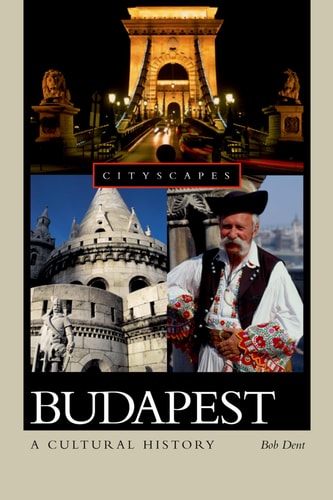
The views of Budapest by the River Danube are unparalleled in Europe. On one side the Buda Hills reach almost to the riverside, with Castle Hill and Gellért Hill offering outstanding panoramas. Pest, linked to Buda by a series of imposing bridges, with its mixture of late nineteenth-century Historicist and early twentieth-century Art Nouveau architecture, is still very much a "turn-of-the-century" city.For more than fifty years prior to the Second World War, Budapest was one of the outstanding cultural capitals of Central Europe, on a par with, and in some ways ahead of, Vienna and Prague. Now no longer "hidden" behind the Iron Curtain, much of that old atmosphere has returned. With its rich and often turbulent history, its unique thermal baths, its excellent public transport system, its street cafés and broad-ranging cultural scene, Budapest is a captivating metropolis, currently being rediscovered as one of the liveliest cities in the region.* City on the Danube: Straddling the majestic river, Budapest's setting is unique; bridges and baths, cafes and squares; an architecture than recalls the pre-1914 era.* City of fusions: Bartók and Kodály fused folk and classical; the tradition continues with Budapest's vibrant mixture of live folk, gypsy, klezmer and jazz.* City of the unknown: Breaking through the barrier of the Hungarian language, often described as impenetrable, presented here are writers and poets deserving international recognition.
Menrva's Summary
THE THESIS
This book investigates the historical and cultural evolution of Budapest, examining how the city reclaimed its status as a premier Central European capital following the collapse of the Iron Curtain. Author Bob Dent provides a comprehensive analysis of the city's architectural, musical, and literary heritage. By synthesizing historical context with contemporary observations, the text argues that Budapest’s unique identity is defined by its synthesis of diverse influences and its resilience through periods of significant political turbulence.
THE SCOPE MAP
What You Will Find
- Historical analysis of Budapest's development from the pre-1914 era through the post-Cold War period.
- Examination of architectural movements including Historicism and Art Nouveau.
- Exploration of the city's musical traditions, specifically the fusion of folk, classical, and jazz influences.
- Profiles of Hungarian writers and poets who have historically lacked international exposure.
THE AUTHORITY PERSPECTIVE
Experts and travelers alike identify this work as a thorough introduction to the cultural fabric of the Hungarian capital. Readers frequently note that the prose effectively balances historical depth with a practical appreciation for the city's modern atmosphere.
Page Count:
260
Publication Date:
2007-04-12
Publisher:
Oxford University Press
ISBN-10:
0195314956
ISBN-13:
9780195314953
Travel
History
Hungary
Europe
Community Tags
Similar Books