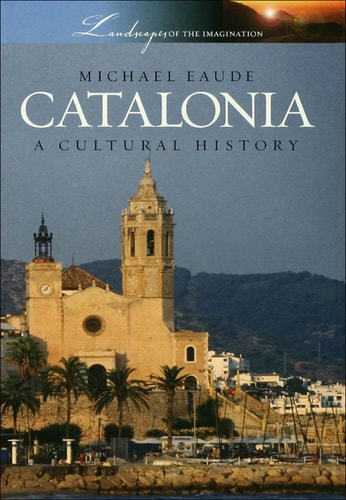
Catalonia: A Cultural History
0
0
As an Amazon Associate and affiliate partner, Menrva Books earns from qualifying purchases. Learn more
Author Description
Squeezed between more powerful France and Spain, Catalonia has endured a violent history. Its medieval empire that conquered Naples, Sicily and Athens was crushed by Spain. Its geography, with the Pyrenees falling sharply to the rugged Costa Brava, is tormented, too.Michael Eaude traces this history and it monuments: roman Tarragona, celebrated by the poet Martial; Greek Empúries, lost for centuries beneath the sands; medieval Romanesque architecture in the Vall de Bo:i churches (a World Heritage Series) and Poblet and Santes Creus monasteries. He tells the stories of several of Catalonia's great figures: Abbot Olivia, who brought Moorish learning to Europe, the ruthless mercenary, Roger de Flor, and Verdaguer, handsome poet-priest.Catalonia is famous today for its twentieth-century art. This book focuses on the revolutionary Art Nouveau buildings (including the Sagrada Família) of Antoni Gaudí. It also explores the region's artistic legacy: the young Picasso painting Barcelona's vibrant slums; Salvador Dalí, inspired by the twisted rocks of Cap de Creus to paint his landscapes of the human mind; and Joan Miró, discovering the colors of the red earth at Montroig.
Menrva's Summary
THE THESIS
This book investigates the complex cultural and historical identity of Catalonia as a region defined by its unique geography and its position between France and Spain. Michael Eaude, an experienced observer of Catalan culture, utilizes a blend of historical analysis, architectural study, and biographical sketches to argue that Catalonia's distinct character is forged through its resilience against external dominance and its profound artistic contributions. The text examines how the region's physical landscape has influenced both its political trajectory and its creative output over several centuries.
THE SCOPE MAP
What You Will Find
- Historical analysis of Catalonia from its medieval empire to its modern political status.
- Architectural surveys of Roman, Greek, and Art Nouveau sites including the Sagrada Família.
- Biographical profiles of influential figures such as Abbot Olivia, Roger de Flor, and Antoni Gaudí.
- Exploration of the artistic legacy of Picasso, Dalí, and Miró within the context of the Catalan landscape.
THE AUTHORITY PERSPECTIVE
Experts and readers frequently cite this work as a comprehensive introduction to the cultural nuances of the region. The text is noted for its ability to synthesize dense historical data with accessible artistic commentary, making it a useful resource for both travelers and students of European history.
Page Count:
304
Publication Date:
2008-01-08
Publisher:
Oxford University Press
ISBN-10:
0195327977
ISBN-13:
9780195327977
Travel
History
Spain history
Art History
Europe
Cultural History