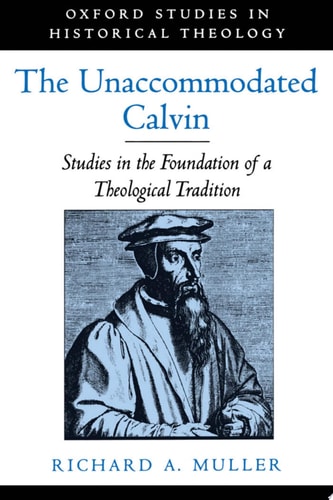
The Unaccommodated Calvin: Studies in the Foundation of a Theological Tradition
0
0
As an Amazon Associate and affiliate partner, Menrva Books earns from qualifying purchases. Learn more
Author Description
This book attempts to understand Calvin in his 16th-century context, with attention to continuities and discontinuities between his thought and that of his predecessors, contemporaries, and successors. Muller pays particular attention to the interplay between theological and philosophical themes common to Calvin and the medieval doctors, and to developments in rhetoric and method associated with humanism.
Menrva's Summary
THE THESIS
This work investigates the theological framework of John Calvin by situating his thought within the specific intellectual and historical context of the 16th century. Richard A. Muller, a prominent scholar in historical theology, utilizes a rigorous methodology to examine the relationship between Calvin's ideas and the broader traditions of medieval scholasticism and Renaissance humanism. By analyzing both continuities and discontinuities, Muller challenges common misconceptions regarding Calvin's isolation from his predecessors and contemporaries. The book provides a detailed argument for viewing Calvin as a figure deeply embedded in the evolving rhetorical and philosophical currents of his era.
THE SCOPE MAP
What You Will Find
- Analysis of the interplay between 16th-century theological themes and medieval scholastic philosophy.
- Examination of the influence of humanistic rhetoric and methodology on Calvin's writing.
- Comparative study of Calvin's thought against his predecessors, contemporaries, and later successors.
- Historical contextualization of Reformed theology within the broader development of Christian doctrine.
THE AUTHORITY PERSPECTIVE
Scholars and theologians frequently cite this text as a foundational resource for understanding the intellectual history of the Reformation. Readers often note the academic density of the prose, which requires a strong background in historical theology to fully appreciate the nuanced arguments presented.
Page Count:
320
Publication Date:
2001-01-01
Publisher:
Oxford University Press USA
ISBN-10:
0195348567
ISBN-13:
9780195348569
Religion
History
Philosophy
Reformation
Theology
Christianity