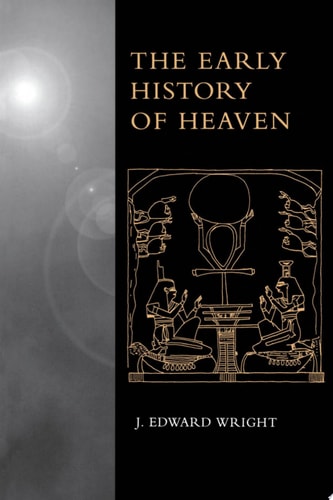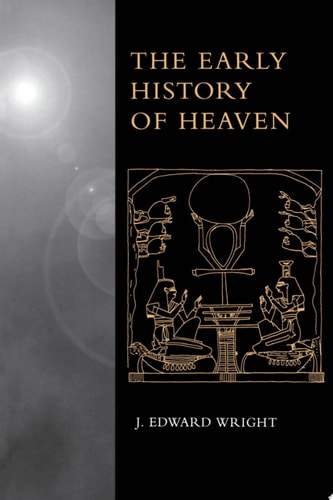
The Early History of Heaven
0
0
As an Amazon Associate and affiliate partner, Menrva Books earns from qualifying purchases. Learn more
Author Description
When we think of "heaven," we generally conjure up positive, blissful images. Heaven is, after all, where God is and where good people go after death to receive their reward. But how and why did Western cultures come to imagine the heavenly realm in such terms? Why is heaven usually thought to be "up there," far beyond the visible sky? And what is the source of the idea that the post mortem abode of the righteous is in this heavenly realm with God? Seeking to discover the roots of these familiar notions, this volume traces the backgrounds, origin, and development of early Jewish and Christian speculation about the heavenly realm -- where it is, what it looks like, and who its inhabitants are. Wright begins his study with an examination of the beliefs of ancient Israel's neighbors Egypt and Mesopotamia, reconstructing the intellectual context in which the earliest biblical images of heaven arose. A detailed analysis of the Hebrew biblical texts themselves then reveals that the Israelites were deeply influenced by images drawn from the surrounding cultures. Wright goes on to examine Persian and Greco-Roman beliefs, thus setting the stage for his consideration of early Jewish and Christian images, which he shows to have been formed in the struggle to integrate traditional biblical imagery with the newer Hellenistic ideas about the cosmos. In a final chapter Wright offers a brief survey of how later Jewish, Christian, and Islamic traditions envisioned the heavenly realms. Accessible to a wide range of readers, this provocative book will interest anyone who is curious about the origins of this extraordinarily pervasive and influential idea.
Menrva's Summary
THE THESIS
This volume investigates the historical origins and cultural evolution of the concept of heaven within Western religious traditions. J. Edward Wright, a scholar of ancient Near Eastern religions, utilizes a comparative framework to analyze how early Jewish and Christian conceptions of the afterlife and the divine realm were shaped by neighboring civilizations. By synthesizing biblical texts with archaeological and historical data from Egypt, Mesopotamia, Persia, and the Greco-Roman world, the author argues that the modern understanding of heaven is a complex amalgamation of ancient cosmological speculation and theological integration.
THE SCOPE MAP
What You Will Find
- Comparative analysis of ancient Egyptian and Mesopotamian cosmological beliefs.
- Examination of Hebrew biblical texts regarding the nature and location of the divine realm.
- Investigation of the influence of Hellenistic philosophy on early Jewish and Christian thought.
- Survey of the development of heavenly imagery across later Jewish, Christian, and Islamic traditions.
THE AUTHORITY PERSPECTIVE
Scholars and students of religious history frequently cite this work as a clear, accessible entry point into the complex development of ancient cosmology. Experts highlight the author's ability to synthesize diverse cultural influences into a coherent narrative that remains grounded in primary source analysis.
Page Count:
336
Publication Date:
2002-01-01
Publisher:
Oxford University Press
ISBN-10:
0195348494
ISBN-13:
9780195348491
Religion
History
Christianity
Theology
Heaven
Judaism
Ancient History