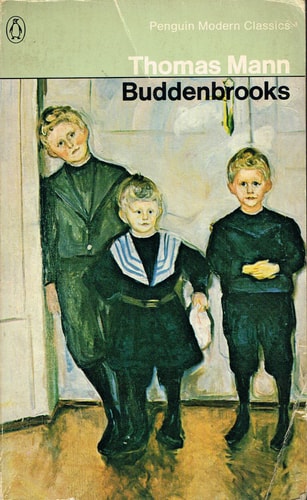
Buddenbrooks: The Decline of a Family
0
0
As an Amazon Associate and affiliate partner, Menrva Books earns from qualifying purchases. Learn more
Author Description
A Major Literary Event: a brilliant new translation of Thomas Mann's first great novel, one of the two for which he was awarded the Nobel Prize in literature in 1929.Buddenbrooks, first published in Germany in 1900, when Mann was only twenty-five, has become a classic of modem literature -- the story of four generations of a wealthy bourgeois family in northern Germany. With consummate skill, Mann draws a rounded picture of middle-class life: births and christenings; marriages, divorces, and deaths; successes and failures. These commonplace occurrences, intrinsically the same, vary slightly as they recur in each succeeding generation. Yet as the Buddenbrooks family eventually succumbs to the seductions of modernity -- seductions that are at variance with its own traditions -- its downfall becomes certain.In immensity of scope, richness of detail, and fullness of humanity, Buddenbrooks surpasses all other modem family chronicles; it has, indeed, proved a model for most of them. Judged as the greatest of Mann's novels by some critics, it is ranked as among the greatest by all. Thomas Mann was awarded the Nobel Prize for literature in 1929.
Menrva's Summary
THE PULSE
The central conflict arises from the gradual erosion of the Buddenbrook family's commercial prosperity and social standing as they struggle to reconcile their traditional bourgeois values with the encroaching demands of modernity.
Thomas Mann follows the trajectory of four generations of the Buddenbrook family in northern Germany, documenting their rise and inevitable decline. The narrative functions as a multi-generational chronicle, tracking births, marriages, business ventures, and deaths with meticulous detail. The family members must navigate the tension between their duty to the family firm and their individual desires, often finding themselves constrained by the rigid expectations of their social class. The prose maintains a third-person perspective, observing the characters with a detached yet deeply observant eye as they confront the shifting economic and cultural landscape of the nineteenth century.
INSIDE THE PAGES
- Multi-generational narrative structure spanning several decades
- Detailed depiction of nineteenth-century German bourgeois social customs
- Exploration of the conflict between artistic temperament and commercial duty
- Extensive character studies of the Buddenbrook lineage
- Realistic portrayal of the decline of a mercantile dynasty
- Integration of philosophical reflections on the nature of success and failure
- Precise observation of domestic life and family rituals
- Examination of the impact of modernity on traditional family structures
THE COLLECTIVE ECHO
Readers and critics frequently highlight the immense scope and rich detail that Mann employs to construct this multi-generational portrait. Discussion often centers on the subtle shift in tone as the family moves from the robust confidence of the early generations to the weary introspection of the later descendants. Many observers note that the pacing is deliberate, mirroring the slow, inevitable decay of the family's influence over time. The balance between the external business world and the internal psychological lives of the characters is often cited as a primary strength of the work. Readers frequently emphasize the effectiveness of the atmosphere in capturing the specific cultural milieu of northern Germany during this period.
Page Count:
587
Publication Date:
1975-01-01
Publisher:
Penguin
ISBN-10:
0140012141
ISBN-13:
9780140012149
Politics
Historical Fiction
History
Classic Literature
Realism
Elections & Political Process
Politics & Government
Family Saga
German
Greece
Community Tags
Similar Books