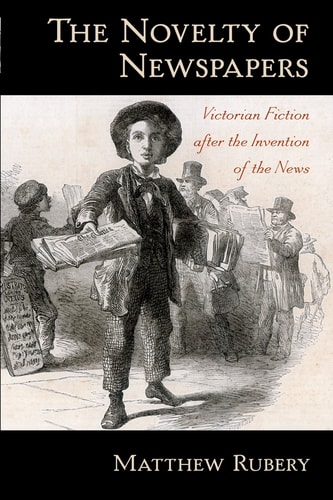
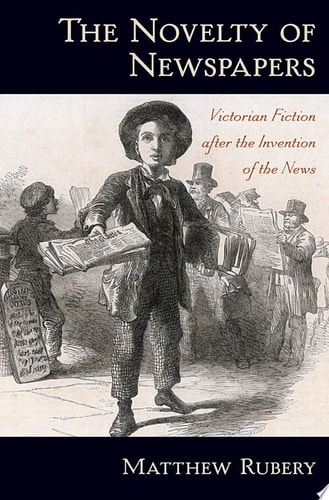
The Novelty of Newspapers: Victorian Fiction After the Invention of the News
0
0
As an Amazon Associate and affiliate partner, Menrva Books earns from qualifying purchases. Learn more
Author Description
Arising in the 1800s and soon drawing a million readers a day, the commercial press profoundly influenced the work of Brontë, Braddon, Dickens, Conrad, James, Trollope, and others who mined print journalism for fictional techniques. Five of the most important of these narrative conventions--the shipping intelligence, personal advertisement, leading article, interview, and foreign correspondence--show how the Victorian novel is best understood alongside the simultaneous development of newspapers. In highly original analyses of Victorian fiction, this study also captures the surprising ways in which public media enabled the expression of private feeling among ordinary readers: from the trauma caused by a lover's reported suicide to the vicarious gratification felt during a celebrity interview; from the distress at finding one's behavior the subject of unflattering editorial commentary to the apprehension of distant cultures through the foreign correspondence. Combining a wealth of historical research with a series of astute close readings, The Novelty of Newspapers breaks down the assumed divide between the epoch's literature and journalism and demonstrates that newsprint was integral to the development of the novel.
Menrva's Summary
THE THESIS
This study investigates how the emergence of the commercial press in the 19th century fundamentally reshaped the narrative techniques and thematic concerns of Victorian fiction. Matthew Rubery, a scholar of Victorian literature and media, synthesizes historical research with close readings of canonical authors such as Dickens, Brontë, and James. He argues that the novel did not develop in isolation but was deeply intertwined with the rise of mass-market journalism, utilizing specific newsprint conventions to structure fictional narratives and explore the intersection of public media and private experience.
THE SCOPE MAP
What You Will Find
- Analysis of five core journalistic conventions: shipping intelligence, personal advertisements, leading articles, interviews, and foreign correspondence.
- Examination of how print media influenced the works of authors including Brontë, Braddon, Dickens, Conrad, James, and Trollope.
- Exploration of the emotional impact of media on Victorian readers, ranging from trauma to vicarious gratification.
- A historical framework that bridges the divide between the development of the novel and the evolution of the commercial press.
THE AUTHORITY PERSPECTIVE
Scholars and critics recognize this work as a significant contribution to the study of Victorian media ecology and the history of the novel. Readers frequently note the clarity of the author's prose and the effectiveness of his methodology in demonstrating the symbiotic relationship between journalism and literary fiction.
Page Count:
248
Publication Date:
2014-02-01
Publisher:
Oxford University Press
ISBN-10:
0195369270
ISBN-13:
9780195369274
History
Journalism history
Victorian
Literary Criticism
Press
Media Studies
Community Tags
Other Editions(2)
Similar Books