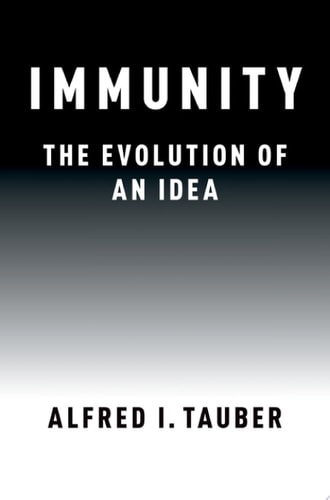
Immunity: The Evolution of an Idea
0
0
As an Amazon Associate and affiliate partner, Menrva Books earns from qualifying purchases. Learn more
Author Description
Modern immunology traditionally conceives of the immune system as providing defense against pathogens. Alfred I. Tauber criticizes this conception of immunity as too narrow, because it discounts much of the immune system's other normal functions. These include active tolerance of nutritional exchanges with the environment and the stabilization of cooperative relationships with resident micro-organisms. An expanded account extends immunity's functional role from singular 'defense' to broadened discernment of environmental 'exchange.' This ecological perspective has profound theoretical implications, for the basic notion of immune identity is reconfigured: highlighting the organism as a holobiont (a consortium of diverse organisms living in cooperative relationships) challenges prevailing concepts of individuality and the self/nonself dichotomy heretofore organizing immune theory. Indeed, if theoretical interest is focused on the challenges of maintaining immune balance in the full ecological context of the organism, then immune regulation assumes new complexity. Tauber maintains that the key to unravelling that puzzle requires a critical re-assessment of the cognitive processes that underlie immune effector functions. Accordingly, he provides the outline of a re-formulated 'cognitive paradigm' that dispenses with agent-based models and adopts an ecologically conceived understanding of perception and information processing. The implications of this revised configuration of immunity and its deconstructed notions of individuality and selfhood have wide significance for philosophers and life scientists working in immunology, ecology, and the cognitive sciences.
Menrva's Summary
THE THESIS
This book investigates whether the traditional conception of the immune system as a purely defensive mechanism is insufficient to explain the organism's complex biological functions. Alfred I. Tauber, a philosopher and historian of science, utilizes historical analysis and biological theory to challenge the prevailing self/nonself dichotomy. He argues for a shift toward an ecological perspective that views the organism as a holobiont, requiring a new cognitive paradigm to understand immune regulation.
THE SCOPE MAP
What You Will Find
- A critique of the defense-oriented model of immunology
- The holobiont framework for understanding organismal identity
- A proposed cognitive paradigm for immune information processing
Scope Limits
- The text does not provide a clinical manual for treating immune disorders
- It does not focus on the molecular mechanics of specific pathogens
THE AUTHORITY PERSPECTIVE
Experts recognize this work as a significant contribution to the philosophy of biology, particularly for its challenge to reductionist immunological models. Readers frequently note the academic density of the prose, which is primarily intended for scholars and advanced students in the life sciences and philosophy.
Page Count:
323
Publication Date:
2017-01-01
Publisher:
Oxford University Press
ISBN-10:
0190651261
ISBN-13:
9780190651268
Philosophy
Science
Ecology
Immunology
Philosophy of
Medical
Allied Health
Biology
Community Tags
Similar Books