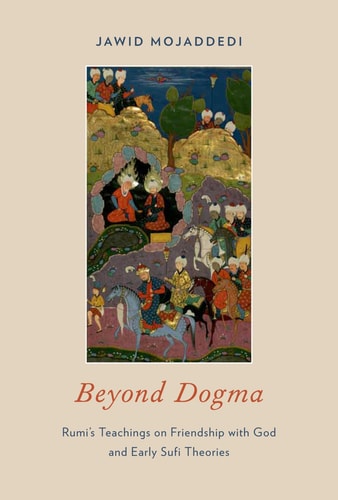
Beyond Dogma: Rumi's Teachings on Friendship with God and Early Sufi Theories
0
0
As an Amazon Associate and affiliate partner, Menrva Books earns from qualifying purchases. Learn more
Author Description
Despite Rumi's (d. 1273) recent emergence as a best-selling poet in the English-speaking world, fundamental questions about his teachings, such as the relationship of his Sufi mysticism to the wider Islamic religion, remain contested. In this groundbreaking study, Jawid Mojaddedi reaches to the heart of the matter by examining Rumi's teachings on walaya (Friendship with God) in light of earlier discourse in the wider Sufi tradition and juridico-theological Islam. Walaya is not only central to Rumi's teachings, but forms the basis for the celebration of intimacy, communication with the Divine, and transcendence of conventional religiosity in his poetry. And yet walaya is the aspect of Sufism which has proven the most difficult to reconcile with juridico-theological Islam.In addition to its focus on Rumi, Beyond Dogma presents a perceptive analysis of the historical development of the discourse on walaya in the formative centuries of Sufism. This period coincides with the time when juridico-theological Islam rose to dominance, as reflected in the harmonizing efforts of theoretical Sufi writings, especially the manuals of the tenth and eleventh centuries. Mojaddedi's analysis facilitates a nuanced and contextualized evaluation of Rumi's teachings on walaya, which had already attracted a range of views before his time: from arguments in favor of its superiority to Prophethood, to guarantees of subordinate deference towards the Prophetic heritage interpreted by juridico-theological scholars. In the process, Beyond Dogma enables a fresh evaluation of the influential early Sufi manuals in their historical context, while also highlighting the significance for juridico-theological scholars of fundamental dogma in the process of consolidating their own dominance.
Menrva's Summary
THE THESIS
This study investigates how Rumi’s concept of walaya, or Friendship with God, functions as a bridge and a point of contention between his mystical poetry and the broader framework of juridico-theological Islam. Jawid Mojaddedi, a scholar of Persian literature and Sufism, utilizes historical analysis of early Sufi manuals and theological texts to contextualize Rumi’s work. By examining the evolution of the discourse on walaya from the tenth century onward, the author argues that Rumi’s teachings represent a specific, nuanced engagement with established religious dogma rather than a rejection of it.
THE SCOPE MAP
What You Will Find
- Historical development of the concept of walaya within the formative centuries of Sufism.
- Comparative analysis between Rumi’s poetic expressions and the tenth and eleventh-century Sufi manuals.
- Examination of the tension between mystical intimacy with the Divine and the rise of juridico-theological authority.
- Contextual evaluation of how early scholars attempted to harmonize Sufi practice with Prophetic heritage.
THE AUTHORITY PERSPECTIVE
Scholars and students of Islamic mysticism frequently cite this work for its rigorous historical contextualization of Rumi’s often-misinterpreted spiritual themes. The text is recognized for its academic density and its ability to bridge the gap between literary appreciation of Rumi’s poetry and the technical history of Sufi theology.
Page Count:
240
Publication Date:
2012-06-08
Publisher:
Oxford University Press
ISBN-10:
0195369238
ISBN-13:
9780195369236
Philosophy
Religion
History
Sufism
Theology
Islamic Studies
God knowableness
Criticism history
God Islam
Community Tags
Similar Books