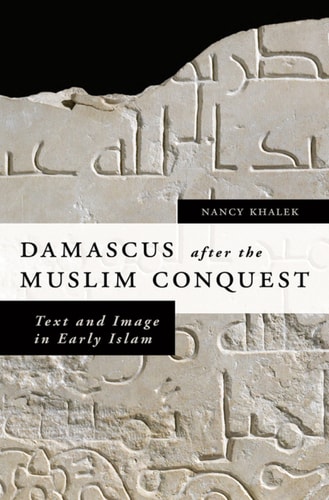
Damascus after the Muslim Conquest: Text and Image in Early Islam
0
0
As an Amazon Associate and affiliate partner, Menrva Books earns from qualifying purchases. Learn more
Author Description
Before it fell to Muslim armies in AD 635-6 Damascus had a long and prestigious history as a center of Christianity. How did this city, which became the capitol of the Islamic Empire and its people, negotiate the transition from a late antique or early Byzantine world to an Islamic culture? In Damascus after the Muslim Conquest, Nancy Khalek demonstrates that the changes that took place in Syria during this formative period of Islamic life were not simply a matter of the replacement of one civilization by another as a result of military conquest, but rather of shifting relationships and practices in a multifaceted social and cultural setting. Even as late antique forms of religion and culture persisted, the formation of Islamic identity was affected by the people who constructed, lived in, and narrated the history of their city. Khalek draws on the evidence of architecture and the testimony of pilgrims, biographers, geographers, and historians to shed light on this process of identity formation. Offering a fresh approach to the early Islamic period, she moves the study of Islamic origins beyond a focus on issues of authenticity and textual criticism, and initiates an interdisciplinary discourse on narrative, storytelling, and the interpretations of material culture.
Menrva's Summary
THE THESIS
This book investigates how Damascus negotiated the transition from a late antique Byzantine center to the capital of the early Islamic Empire. Nancy Khalek, a scholar of early Islamic history, challenges the traditional narrative of a sudden civilizational replacement. By analyzing a combination of architectural evidence and historical texts, she argues that the formation of Islamic identity was a complex, gradual process shaped by the ongoing interactions between existing cultural practices and new religious frameworks.
THE SCOPE MAP
What You Will Find
- Analysis of the transition period in Syria during the 7th and 8th centuries.
- Examination of architectural developments and urban transformation in Damascus.
- Synthesis of diverse primary sources including pilgrim accounts, biographies, and geographical records.
- Interdisciplinary methodology combining material culture with textual criticism.
Scope Limits
- The study focuses specifically on the city of Damascus and its immediate regional context.
- It does not provide a comprehensive military history of the Muslim conquests.
THE AUTHORITY PERSPECTIVE
Scholars and historians recognize this work as a significant contribution to the study of early Islamic identity formation. Readers frequently note the academic rigor and the author's ability to synthesize disparate archaeological and textual evidence into a cohesive argument.
Page Count:
215
Publication Date:
2011-01-01
Publisher:
Oxford University Press
ISBN-10:
0190453745
ISBN-13:
9780190453749
Religion
History
Archaeology
Damascus Syria
Middle Eastern
Cultural History
Islamic Studies
Byzantine History
Syria history
Community Tags
Similar Books