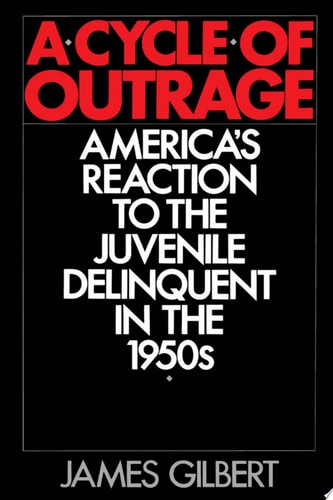
A Cycle of Outrage
0
0
As an Amazon Associate and affiliate partner, Menrva Books earns from qualifying purchases. Learn more
Author Description
The Youth Culture Is On Everyone's Lips Today, As Pressures Build To Ban Controversial Song Lyrics, Reintroduce School Prayer, And Prohibit Teenagers' Access To Contraceptives. It's Not The First Time Americans Have Been Outraged Over The Seduction Of The Innocent.. When James Dean And Marlon Brando Donned Their Motorcycle Jackets And Adopted Alienated Poses In Rebel Without A Cause, East Of Eden, And The Wild One, In The 1950's, So Did Countless Numbers Of American Teenagers. Or So It Seemed To Their Parents. American Teenagers Were Looking And Acting Like Juvenile Delinquents. By Mid-decade, The Nation Had Reached A Pitch Of Near Obsession With The Harmful Effects Of Film, Radio, Comic Books, And Television On American Youth. Experts Across The Land Denounced Mass Culture As Depriving Young People Of Their Innocence And Weakening Their Parents' Hold On Them. By The End Of The Decade, The Obsession Had Ended, Although The Actual Numbers Of Juvenile Delinquents Had Apparently Risen. A Cycle Of Outrage Explores The 1950's Debate Over The Media And Juvenile Delinquency Among Parents, Professionals, And The Creators Of Mass Culture Themselves. In This Groundbreaking Study, James Gilbert Sees The Attempt To Blame The Media As Part Of A Larger Reaction Of Discomfort Echoed In Recent Debates Over Censorship. The Book Examines How The Central Phenomena Of The 1950's--the Development Of Youth Culture And The Rise Of A Mass Media Society--became Intertwined And Confused And Argues That Young People Ceased To Be A Threat As They Were Recognized To Be A Market.
Menrva's Summary
THE THESIS
This book investigates the recurring American tendency to blame mass media for the perceived moral decline and delinquency of youth. James B. Gilbert, a historian specializing in American culture, utilizes archival research and historical analysis to demonstrate how 1950s anxieties regarding film, television, and comic books mirrored earlier and later moral panics. He argues that the demonization of media served as a displacement for deeper societal discomforts, ultimately concluding that the perceived threat of youth culture dissipated only when teenagers were successfully commodified as a market.
THE SCOPE MAP
What You Will Find
- Historical analysis of 1950s media influence on American youth culture.
- Examination of the intersection between juvenile delinquency and mass media consumption.
- Case studies of public reaction to figures like James Dean and Marlon Brando.
- Analysis of the transition from viewing youth as a moral threat to viewing them as a consumer demographic.
THE AUTHORITY PERSPECTIVE
Scholars and historians frequently cite this work as a foundational text for understanding the historical roots of media-related moral panics in the United States. Readers often note the academic rigor of the prose, which provides a clear framework for analyzing how societal anxieties are projected onto popular culture.
Page Count:
273
Publication Date:
1988-01-01
Publisher:
Oxford University Press
ISBN-10:
0195363566
ISBN-13:
9780195363562
History
Sociology
American History
Media Studies
Community Tags
Similar Books