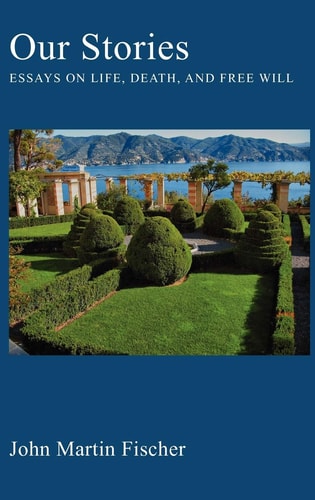
Our Stories: Essays on Life, Death, and Free Will
0
0
As an Amazon Associate and affiliate partner, Menrva Books earns from qualifying purchases. Learn more
Author Description
In this collection of essays on the metaphysical issues pertaining to death, the meaning of life, and freedom of the will, John Martin Fischer argues (against the Epicureans) that death can be a bad thing for the individual who dies. He defends the claim that something can be a bad thing--a misfortune--for an individual, even if he never experiences it as bad (and even if he does not any longer exist). Fischer also defends the commonsense asymmetry in our attitudes toward death and prenatal nonexistence: we are indifferent to the time before we are born, but we regret that we do not live longer. Further, Fischer argues (against the immortality curmudgeons, such as Heidegger and Bernard Williams), that immortal life could be desirable, and shows how the defense of the (possible) badness of death and the (possible) goodness of immortality exhibit a similar structure; on Fischer's view, the badness of death and the goodness of life can be represented on spectra that display certain continuities.Building on Fischer's previous book, My Way a major aim of this volume is to show important connections between issues relating to life and death and issues relating to free will. More specifically, Fischer argues that we endow our lives with a certain distinctive kind of meaning--an irreducible narrative dimension of value--by exhibiting free will. Thus, in acting freely, we transform our lives so that our stories matter.
Menrva's Summary
THE THESIS
Can an individual be harmed by death even if they no longer exist to experience that harm, and how does the exercise of free will imbue a human life with narrative meaning? John Martin Fischer, a distinguished philosopher, utilizes analytical metaphysics to challenge traditional Epicurean views on mortality and the existential concerns raised by thinkers like Heidegger and Williams. He constructs a framework that links the potential misfortune of death with the potential value of immortality, arguing that both are connected to the agency we exert through free will.
THE SCOPE MAP
What You Will Find
- Philosophical arguments regarding the asymmetry between prenatal nonexistence and post-mortem nonexistence.
- A defense of the concept that death can be a misfortune despite the absence of the subject.
- Analysis of the potential desirability of immortality and its structural relationship to the value of life.
- An exploration of the narrative dimension of human existence as a product of free will.
THE AUTHORITY PERSPECTIVE
Experts in the field of analytic philosophy recognize this collection as a significant contribution to the ongoing discourse on death and agency. Readers frequently note the academic density of the prose, which requires a strong background in metaphysical inquiry to fully appreciate the author's logical arguments.
Page Count:
192
Publication Date:
2009-05-06
Publisher:
Oxford University Press
ISBN-10:
0195374959
ISBN-13:
9780195374957
Philosophy
Free Will
Ethics
Death
Life
Metaphysics
Community Tags
Similar Books