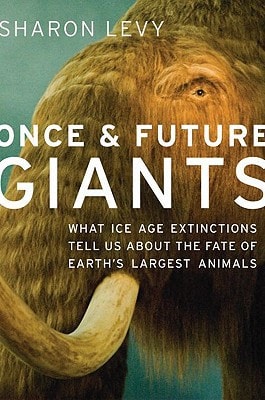
Once and Future Giants: What Ice Age Extinctions Tell Us About the Fate of Earth's Largest Animals
0
0
As an Amazon Associate and affiliate partner, Menrva Books earns from qualifying purchases. Learn more
Author Description
Until about 13,000 years ago, North America was home to a menagerie of massive mammals. Mammoths, camels, and lions walked the ground that has become Wilshire Boulevard in Los Angeles and foraged on the marsh land now buried beneath Chicago's streets. Then, just as the first humans reached the Americas, these Ice Age giants vanished forever.In Once and Future Giants, science writer Sharon Levy digs through the evidence surrounding Pleistocene large animal ("megafauna") extinction events worldwide, showing that understanding this history--and our part in it--is crucial for protecting the elephants, polar bears, and other great creatures at risk today. These surviving relatives of the Ice Age beasts now face the threat of another great die-off, as our species usurps the planet's last wild places while driving a warming trend more extreme than any in mammalian history. Deftly navigating competing theories and emerging evidence, Once and Future Giants examines the extent of human influence on megafauna extinctions past and present, and explores innovative conservation efforts around the globe. The key to modern-day conservation, Levy suggests, may lie fossilized right under our feet.
Menrva's Summary
THE THESIS
This book investigates the causes of Pleistocene megafauna extinctions and evaluates how this historical data informs current conservation strategies for endangered large mammals. Sharon Levy, an experienced science writer, synthesizes paleontological evidence, climate records, and archaeological findings to construct a framework for understanding human impact on biodiversity. She argues that the patterns observed in the disappearance of Ice Age giants provide a critical lens through which to view the anthropogenic threats facing modern species like elephants and polar bears.
THE SCOPE MAP
What You Will Find
- Analysis of Pleistocene megafauna extinction events across multiple continents.
- Evaluation of competing scientific theories regarding the role of human hunting versus climate change.
- Examination of modern conservation methodologies and habitat protection efforts.
- Synthesis of fossil records and contemporary ecological data to predict future extinction risks.
THE AUTHORITY PERSPECTIVE
Experts and readers frequently cite this work as a clear, accessible synthesis of complex paleontological and ecological debates. It is widely regarded as a valuable resource for those seeking to understand the intersection of historical extinction patterns and modern environmental policy.
Page Count:
280
Publication Date:
2011-03-22
Publisher:
Oxford University Press
ISBN-10:
0195370120
ISBN-13:
9780195370126
Nature
Science
History
Paleontology
Wildlife conservation
Conservation
Extinction biology
Community Tags
Other Editions(2)

Similar Books