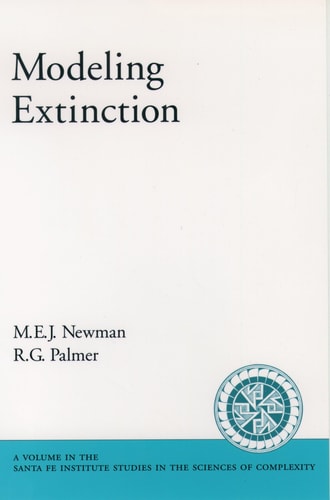
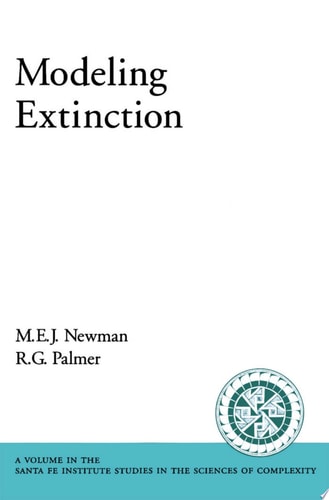
Modeling Extinction
0
0
As an Amazon Associate and affiliate partner, Menrva Books earns from qualifying purchases. Learn more
Author Description
Developed after a meeting at the Santa Fe Institute on extinction modeling, this book comments critically on the various modeling approaches. In the last decade or so, scientists have started to examine a new approach to the patterns of evolution and extinction in the fossil record. This approach may be called "statistical paleontology," since it looks at large-scale patterns in the record and attempts to understand and model their average statistical features, rather than their detailed structure. Examples of the patterns these studies examine are the distribution of the sizes of mass extinction events over time, the distribution of species lifetimes, or the apparent increase in the number of species alive over the last half a billion years. In attempting to model these patterns, researchers have drawn on ideas not only from paleontology, but from evolutionary biology, ecology, physics, and applied mathematics, including fitness landscapes, competitive exclusion, interaction matrices, and self-organized criticality. A self-contained review of work in this field.
Menrva's Summary
THE THESIS
This book investigates the efficacy of statistical modeling in explaining large-scale patterns of evolution and extinction observed within the fossil record. Authors M. E. J. Newman and R. G. Palmer synthesize research originating from a Santa Fe Institute meeting to evaluate the emergence of statistical paleontology. By integrating methodologies from physics, ecology, and applied mathematics, the authors provide a framework for interpreting mass extinction events and species longevity as statistical phenomena rather than isolated historical occurrences. The text serves as a comprehensive review of the interdisciplinary approaches used to quantify long-term biological trends.
THE SCOPE MAP
What You Will Find
- Analysis of mass extinction event distributions over geological time scales.
- Application of fitness landscapes and competitive exclusion models to evolutionary biology.
- Examination of self-organized criticality as a mechanism for extinction patterns.
- Review of statistical methodologies used to interpret species lifetime data.
THE AUTHORITY PERSPECTIVE
Experts recognize this work as a foundational text for those interested in the intersection of complex systems theory and paleontology. Readers frequently note the technical density of the prose, which assumes a baseline familiarity with mathematical modeling and evolutionary theory.
Page Count:
120
Publication Date:
2003-02-20
Publisher:
Oxford University Press
ISBN-10:
0195159462
ISBN-13:
9780195159462
Science
Mathematics
Paleontology
Evolutionary Biology
Ecology
Physics
Extinction biology
Community Tags
Other Editions(2)
Similar Books