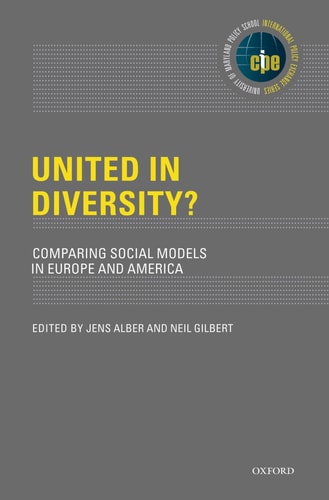
United in Diversity: Comparing Social Models in Europe and America
0
0
As an Amazon Associate and affiliate partner, Menrva Books earns from qualifying purchases. Learn more
Author Description
Since the advent of the European Union, politicians have increasingly emphasized the notion of a European social model as an alternative to the American form of market capitalism, which is seen as promoting economic growth without regard for solidarity and social progress. As this political discourse has advanced, social scientists and academic policy analysts have raised questions concerning the extent to which the E.U. and U.S. social models exist outside the minds of diplomats and politicians seeking to stitch together a common identity. How much unity is there still within Europe after the Eastern enlargements have considerably increased economic and cultural diversity? To whatever extent one might discern a distinct set of commonalities that represent the core of a European approach, how different are the European characteristics of social, economic, and political life from those of America?Addressing these issues, this book systematically analyzes how much European countries and the United States have in common and how much variation we find within the enlarged European Union in eight central spheres of socio-economic and political life: employment, equality/mobility, educational opportunity, integration of immigrants, democratic functioning, political participation, rights to welfare, and levels of public spending. Drawing on empirical analyses by U.S. and European scholars who represent multi-disciplinary backgrounds, each of these topics is put under scrutiny. The results of this study illuminate points of convergence and divergence as seen from the perspectives of scholars from both sides of the Atlantic.
Menrva's Summary
THE THESIS
This book investigates the validity of the European social model as a distinct alternative to American market capitalism by analyzing empirical data across eight socio-economic spheres. The authors, Neil Gilbert and Jens Alber, curate a collection of multi-disciplinary research from both U.S. and European scholars to determine if these models represent actual structural differences or merely political rhetoric. By comparing institutional frameworks and public policy outcomes, the text evaluates the degree of convergence and divergence between these two major geopolitical entities.
THE SCOPE MAP
What You Will Find
- Comparative analysis of employment, equality, and educational opportunity metrics.
- Examination of immigrant integration and democratic participation across diverse European nations.
- Empirical data regarding welfare rights and public spending levels.
- Multi-disciplinary perspectives from international scholars assessing the impact of European Union enlargement.
THE AUTHORITY PERSPECTIVE
Experts recognize this work as a rigorous comparative study that challenges simplified narratives about Western social models. Readers frequently note the academic density of the prose, making it a valuable resource for students and researchers of comparative public policy.
Page Count:
464
Publication Date:
2009-10-07
Publisher:
Oxford University Press
ISBN-10:
0195376633
ISBN-13:
9780195376630
Economics
Europe
Public Policy
International relations
United States
Sociology
Community Tags
Similar Books