The Unfamiliar Abode: Islamic Law in the United States and Britain
0
0
As an Amazon Associate and affiliate partner, Menrva Books earns from qualifying purchases. Learn more
Author Description
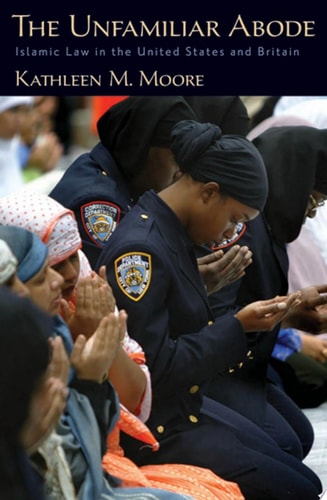
Today there are more Muslims living in diaspora than at any time in history. This situation was not envisioned by Islamic law, which makes no provision for permanent as opposed to transient diasporic communities. Western Muslims are therefore faced with the necessity of developing an Islamic law for Muslim communities living in non-Muslim societies. In this book, Kathleen Moore explores the development of new forms of Islamic law and legal reasoning in the US and Great Britain, as well the Muslims encountering Anglo-American common law and its unfamiliar commitments to pluralism and participation, and to gender, family, and identity. The underlying context is the aftermath of 9/11 and 7/7, the two attacks that arguably recast the way the West views Muslims and Islam. Islamic jurisprudence, Moore notes, contains a number of references to various 'abodes' and a number of interpretations of how Muslims should conduct themselves within those worlds. These include the dar al harb (house of war), dar al kufr (house of unbelievers), and dar al salam (house of peace). How Islamic law interprets these determines the debates that take shape in and around Islamic legality in these spaces. Moore's analysis emphasizes the multiplicities of law, the tensions between secularism and religiosity. She is the first to offer a close examination of the emergence of a contingent legal consciousness shaped by the exceptional circumstances of being Muslim in the U.S and Britain in the 1990s and the first decade of the 21st century
Menrva's Summary
THE THESIS
This book investigates how Muslim communities in the United States and Britain navigate the integration of Islamic jurisprudence within secular, Western common law systems. Kathleen M. Moore, a scholar specializing in law and society, utilizes a comparative legal framework to analyze the emergence of a distinct, contingent legal consciousness among diasporic Muslims. By examining the post-9/11 and post-7/7 political landscapes, the author argues that traditional Islamic legal categories regarding the 'abodes' of the world are being reinterpreted to address the realities of permanent residency in non-Muslim societies.
THE SCOPE MAP
What You Will Find
- Comparative analysis of Islamic legal reasoning within the US and British common law systems.
- Examination of the historical and theological concepts of dar al harb, dar al kufr, and dar al salam.
- Discussion of the tensions between secular pluralism and religious identity in Western legal frameworks.
- Analysis of the impact of major geopolitical events on the development of contemporary Islamic legal consciousness.
THE AUTHORITY PERSPECTIVE
Experts recognize this work as a significant contribution to the study of law and religion, particularly for its focus on the practical application of jurisprudence in diaspora. Scholars frequently cite the text for its nuanced approach to the intersection of secularism and religious identity in the 21st century.
Page Count:
208
Publication Date:
2010-03-18
Publisher:
Oxford University Press
ISBN-10:
0195387813
ISBN-13:
9780195387810
Religion
Law
Islamic Studies
Sociology
Muslims
Muslims europe
Islamic Law
Community Tags
Similar Books