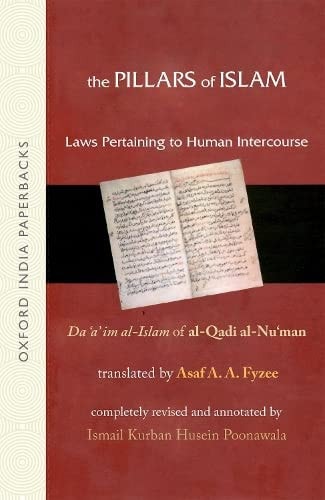
The Pillars of Islam Vol II: Laws Pertaining to Human Intercourse
0
0
As an Amazon Associate and affiliate partner, Menrva Books earns from qualifying purchases. Learn more
Author Description
The Pillars of Islam, was the culmination of Nu'man's efforts in the field of jurisprudence for more than thirty years. It was commissioned by the Fatimid Caliph al Mu'izz-Din Allah and was officially promulgated as the state code. The judicial and legal system constructed in The Pillars, both for the use of the state as well as the Isma'ili community is, therefore, unique, and Nu'man is rightly considered as its founder. The Pillars is considered by the Musta'li-Tayyibi Bohras as the greatest authority on Isma'ili law and has until today remained as the greatest authority in their legal matters. It is also applied by courts in the Indo-Pakistan subcontinent in personal and family matters as the Isma'ili law manual.The second volume of the pillars of Islam deals more precisely with the law than the first volume. It deals with a wide range of subjects such as food, dress, medicine, oaths, hunting, business transactions, loans, partition and construction, evidence, marriage, divorce, wills, inheritance, criminal punishments, questions of apostasy and etiquette of judges.Essential for all libraries and institutions that buy books on Islamic law/studies. This is critical reading for scholars and students of law and religion. It will be especially important for lawyers and judges as this is the greatest authority on Isma'ili law up to the present day and it remains the source of supreme authority in their legal matters. It will also be useful to scholars and students of applied jurisprudence and philosophy.
Menrva's Summary
THE THESIS
This volume investigates the foundational legal framework of Isma'ili jurisprudence as codified by the jurist al-Qadi al-Nu'man under the commission of the Fatimid Caliphate. The author, Ismail K. H. Poonawala, provides a scholarly translation and analysis of this historical legal code, which served as the official state law for the Fatimid Empire. The text examines how these specific statutes were designed to regulate both the public administration of the state and the private conduct of the Isma'ili community, establishing a comprehensive system of religious and civil governance.
THE SCOPE MAP
What You Will Find
- Detailed legal statutes covering food, dress, medicine, and oaths.
- Regulatory frameworks for business transactions, loans, and property construction.
- Judicial procedures regarding evidence, marriage, divorce, and inheritance.
- Guidelines for criminal law, apostasy, and the professional conduct of judges.
THE AUTHORITY PERSPECTIVE
Scholars and legal historians recognize this work as the definitive English-language reference for the Fatimid legal tradition. Experts frequently highlight the text as a foundational resource for understanding the application of Isma'ili law in contemporary personal and family court matters.
Page Count:
624
Publication Date:
2007-05-31
Publisher:
Oxford University Press
ISBN-10:
0195689070
ISBN-13:
9780195689075
Religion
History
Islamic Law
Islamic Studies
Law
Jurisprudence
Community Tags
Similar Books