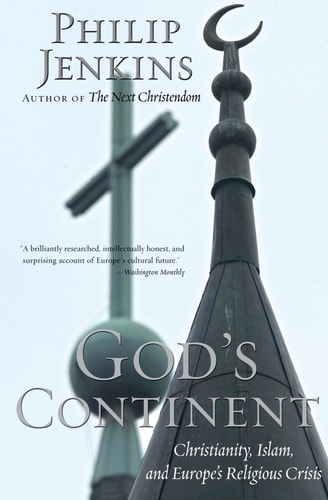
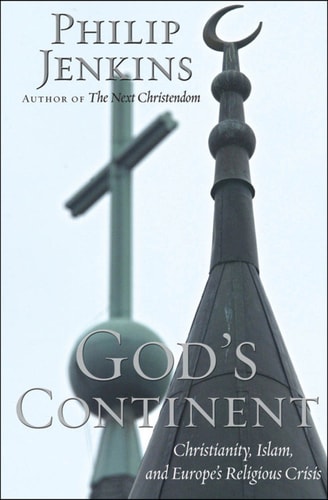
God's Continent: Christianity, Islam, and Europe's Religious Crisis
0
0
As an Amazon Associate and affiliate partner, Menrva Books earns from qualifying purchases. Learn more
Author Description
Is the Christian church in Europe doomed to collapse under the weight of globalization, Western secularism, and a flood of Muslim immigrants? Is Europe on the brink of becoming "Eurabia"?Though many pundits are predicting just such a scenario, God's Continent reveals the flaws in these arguments and offers a much more measured assessment of Europe's religious future. While frankly acknowledging current tensions, Philip Jenkins shows, for instance, that the overheated rhetoric about a Muslim-dominated Europe is based on politically convenient myths: that Europe is being imperiled by floods of Muslim immigrants, exploding Muslim birth-rates, and the demise of European Christianity. He points out that by no means are Muslims the only new immigrants in Europe. Christians from Africa, Asia, and Eastern Europe are also pouring into the Western countries, and bringing with them a vibrant and enthusiastic faith that is helping to transform the face of European Christianity. Jenkins agrees that both Christianity and Islam face real difficulties in surviving within Europe's secular culture. But instead of fading away, both have adapted, and are adapting. Yes, the churches are in decline, but there are also clear indications that Christian loyalty and devotion survive, even as institutions crumble.The third book in an acclaimed trilogy that includes The Next Christendom and The New Faces of Christianity, God's Continent offers a realistic and historically grounded appraisal of the future of Christianity in a rapidly changing Europe.
Menrva's Summary
THE THESIS
This book investigates whether the decline of institutional Christianity in Europe, coupled with increasing Muslim immigration, signals the inevitable collapse of European religious identity or a transformation of the continent's spiritual landscape. Philip Jenkins, a distinguished historian and scholar of global Christianity, utilizes demographic data and historical analysis to challenge alarmist narratives regarding the rise of 'Eurabia.' He argues that while secularism presents a significant challenge, both Christianity and Islam are adapting to the modern European context in ways that defy simplistic predictions of total cultural erasure.
THE SCOPE MAP
What You Will Find
- Demographic analysis of immigration patterns from Africa, Asia, and Eastern Europe.
- Comparative study of institutional decline versus individual religious devotion.
- Evaluation of political rhetoric surrounding Muslim birth rates and cultural integration.
- Historical context regarding the evolution of religious practice within secular Western states.
THE AUTHORITY PERSPECTIVE
Experts and reviewers frequently cite this work as a necessary, balanced counterpoint to sensationalist media coverage of European religious demographics. Scholars appreciate the author's reliance on empirical data to dismantle common myths, noting that the text provides a foundational perspective for understanding the intersection of faith and migration in the twenty-first century.
Page Count:
352
Publication Date:
2009-04-06
Publisher:
Oxford University Press
ISBN-10:
0195384628
ISBN-13:
9780195384628
Religion
Politics
History
Sociology
Christianity
Europe
Islam
Christianity and other religions
Community Tags
Other Editions(3)
Similar Books






Reader Comments
Share Your Thoughts
No comments yet. Be the first to share your thoughts!