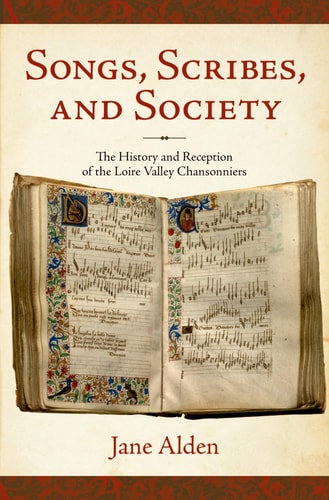
Songs, Scribes, and Society: The History and Reception of the Loire Valley Chansonniers
0
0
As an Amazon Associate and affiliate partner, Menrva Books earns from qualifying purchases. Learn more
Author Description
A new kind of songbook emerged in the later fifteenth century: personalized, portable, and lavishly decorated. Five closely related chansonniers, copied in the Loire Valley region of central France c. 1465-c. 1475, are the earliest surviving examples of this new genre.The Loire Valley Chansonniers preserve the music of such renowned composers as Guillaume Du Fay, Johannes Ockeghem, and Antoine Busnoys. But their importance as musical sources has overshadowed the significance of these manuscripts as artifacts in their own right.This book places the physical objects at center, investigating the means by which they were produced and the broader culture in which they circulated. Jane Alden performs a codicological autopsy upon the manuscripts and reveals the hitherto unrecognized role of scribes in shaping the transmission and reception of the chansons repertory. Alden also challenges the long-held belief that the Loire Valley Chansonniers were intended for royal or noble patrons. Instead, she argues that a rising class of bureaucrats--notaries, secretaries, and other court officials--commissioned these exquisite objects. Active as writers and participants in poetry competitions, these individuals may even have written some of the chansons' texts.The unique integration of image, text, and music found in chansonniers extends their appeal to a broad readership. But for the nineteenth-century scholars who rediscovered these manuscripts, the larger literary and visual resonances were not of primary interest. Alden documents the tangle of motivations--national identity, populist politics, and the rise of the musical masterwork--that informed the earliest writings on these books. Only now is their multifaceted structure the inspiration for a new generation of readers.
Menrva's Summary
THE THESIS
This book investigates the origins, production, and cultural significance of the Loire Valley chansonniers, challenging the assumption that these manuscripts were exclusively commissioned by royal or noble patrons. Jane Alden, a specialist in musicology, utilizes codicological analysis to examine these fifteenth-century songbooks as physical artifacts. She argues that a rising class of court bureaucrats and notaries, rather than the aristocracy, were the primary commissioners and contributors to these collections. By analyzing the intersection of music, text, and visual art, Alden recontextualizes these manuscripts within the social and political landscape of late medieval France.
THE SCOPE MAP
What You Will Find
- Detailed codicological analysis of five specific chansonniers produced in the Loire Valley between 1465 and 1475.
- Examination of the role of scribes and bureaucrats in the creation and transmission of musical repertory.
- Analysis of the nineteenth-century historiography and the political motivations behind the early scholarly reception of these manuscripts.
- Investigation into the integration of image, text, and music as a reflection of the social status of the commissioners.
THE AUTHORITY PERSPECTIVE
Scholars recognize this work as a significant contribution to the study of musical manuscripts, particularly for its shift in focus from purely musical content to the material culture of the objects themselves. Readers frequently note the academic density of the prose, which provides a rigorous framework for understanding the intersection of social history and musicology.
Page Count:
312
Publication Date:
2010-12-17
Publisher:
Oxford University Press
ISBN-10:
0195381521
ISBN-13:
9780195381528
Art History
Music
Cultural History
Music French
Music History
Community Tags
Similar Books