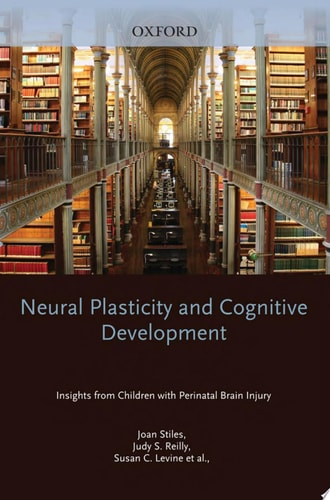
Neural Plasticity and Cognitive Development: Insights from Children with Perinatal Brain Injury
0
0
As an Amazon Associate and affiliate partner, Menrva Books earns from qualifying purchases. Learn more
Author Description
The advent of modern neurobiological methods over the last three decades has provided overwhelming evidence that it is the interaction of genetic factors and the experience of the individual that guides and supports brain development. Brains do not develop normally in the absence of critical genetic signaling, and they do not develop normally in the absence of essential environmental input. The key to understanding the origins and emergence of both the brain and behavior lies in understanding how inherited and environmental factors are engaged in the dynamic and interactive processes that define and direct development of the neurobehavioral system.Neural Plasticity and Cognitive Development focuses on children who suffered focal brain insult (typically stroke) in the pre- or perinatal period which provides a model for exploring the dynamic nature of early brain and cognitive development. In most, though not all, of the cases considered, the injuries affect substantial portions of one cerebral hemisphere, resulting in patterns of neural damage that would compromise cognitive ability in adults. However, longitudinal behavioral studies of this population of children have revealed only mild cognitive deficits, and preliminary data from functional brain imaging studies suggest that alternative patterns of functional organization emerge in the wake of early injury. Neural Plasticity and Cognitive Development posits that the capacity for adaptation is not the result of early insult. Rather, it reflects normal developmental processes which are both dynamic and adaptive operating against a backdrop of serious perturbation of the neural substrate.
Menrva's Summary
THE THESIS
This book investigates how the interaction between genetic factors and environmental experience shapes brain development, specifically through the lens of children with perinatal brain injury. The authors, a team of experts in neurology and cognitive development, utilize longitudinal behavioral studies and functional brain imaging to argue that the brain's capacity for adaptation is a fundamental, normal developmental process rather than a unique response to injury. By examining children who suffered focal brain insults, the text demonstrates how the neurobehavioral system reorganizes itself to maintain cognitive function despite significant neural damage.
THE SCOPE MAP
What You Will Find
- Longitudinal behavioral data on children who experienced pre
- or perinatal stroke.
- Analysis of functional brain imaging techniques used to map neural reorganization.
- Theoretical framework regarding the dynamic interaction of genetic signaling and environmental input.
- Comparative study of cognitive outcomes in children versus adults following similar focal brain insults.
THE AUTHORITY PERSPECTIVE
Experts in the field of developmental neuroscience recognize this work as a significant contribution to the understanding of neuroplasticity in early childhood. Readers frequently note the academic density of the prose, which is tailored for researchers and clinicians interested in the mechanisms of brain recovery.
Page Count:
384
Publication Date:
2012-05-29
Publisher:
Oxford University Press
ISBN-10:
0195389948
ISBN-13:
9780195389944
Psychology
Brain growth
Medicine
Allied Health
Medical
Pediatrics
Neuroplasticity
Infants newborn
Neuroscience
Community Tags
Similar Books













Reader Comments
Share Your Thoughts
No comments yet. Be the first to share your thoughts!