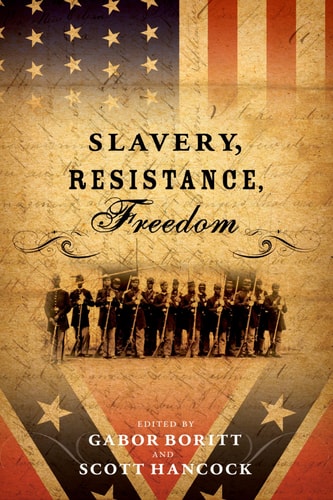
Slavery, Resistance, Freedom
0
0
As an Amazon Associate and affiliate partner, Menrva Books earns from qualifying purchases. Learn more
Author Description
Americans have always defined themselves in terms of their freedoms--of speech, of religion, of political dissent. How we interpret our history of slavery--the ultimate denial of these freedoms--deeply affects how we understand the very fabric of our democracy.This extraordinary collection of essays by some of America's top historians focuses on how African Americans resisted slavery and how they responded when finally free. Ira Berlin sets the stage by stressing the relationship between how we understand slavery and how we discuss race today. The remaining essays offer a richly textured examination of all aspects of slavery in America. John Hope Franklin and Loren Schweninger recount actual cases of runaway slaves, their motivations for escape and the strains this widespread phenomenon put on white slave-owners. Scott Hancock explores how free black Northerners created a proud African American identity out of the oral history of slavery in the south. Edward L. Ayers, William G. Thomas III, and Anne Sarah Rubin draw upon their remarkable Valley of the Shadow website to describe the wartime experiences of African Americans living on both borders of the Mason-Dixon line. Noah Andre Trudeau turns our attention to the war itself, examining the military experience of the only all-black division in the Army of the Potomac. And Eric Foner gives us a new look at how black leaders performed during the Reconstruction, revealing that they were far more successful than is commonly acknowledged--indeed, they represented, for a time, the fulfillment of the American ideal that all people could aspire to political office.Wide-ranging, authoritative, and filled with invaluable historical insight, Slavery, Resistance, Freedom brings a host of powerful voices to America's evolving conversation about race.
Menrva's Summary
THE THESIS
This collection of essays investigates how the history of slavery and the subsequent resistance of African Americans fundamentally shape the modern understanding of American democracy and racial identity. Edited by Gabor S. Boritt and Scott Hancock, the volume compiles research from prominent historians to analyze the transition from bondage to freedom. The contributors utilize primary source documentation and historical case studies to challenge conventional narratives regarding the agency of enslaved people and the political efficacy of black leaders during the Reconstruction era.
THE SCOPE MAP
What You Will Find
- Analysis of runaway slave cases and the resulting social strain on slave-holding populations.
- Examination of the development of African American identity among free black populations in the North.
- Historical documentation of wartime experiences for African Americans residing near the Mason-Dixon line.
- Evaluation of the political performance and success of black leaders during the Reconstruction period.
THE AUTHORITY PERSPECTIVE
Experts recognize this collection as a significant contribution to the historiography of the American Civil War and the Reconstruction era. Readers frequently note the academic rigor of the essays, which provide a comprehensive look at the intersection of race, resistance, and political participation in the United States.
Page Count:
192
Publication Date:
2009-06-01
Publisher:
Oxford University Press
ISBN-10:
0195384601
ISBN-13:
9780195384604
History
Reconstruction
Slavery
Civil War
Government Resistance To
African Americans
Memory
United States
Community Tags
Other Editions(2)

Similar Books
Reader Comments
Share Your Thoughts
No comments yet. Be the first to share your thoughts!