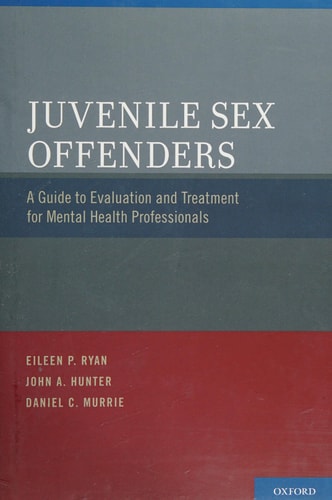
Juvenile Sex Offenders: A Guide to Evaluation and Treatment for Mental Health Professionals
0
0
As an Amazon Associate and affiliate partner, Menrva Books earns from qualifying purchases. Learn more
Author Description
A significant percentage of sexual abuse in the United States is committed by juveniles, and mental health professionals increasingly receive requests to evaluate these juveniles. With an emphasis on practicality and utility, Juvenile Sex Offenders fills a gap in the current literature by providing a thoughtful, thorough approach to evaluating and treating youth who have committed sexual offenses or have engaged in sexually abusive behavior.Serving as a functional guide, this text expertly prepares clinicians for the challenging task of evaluating juveniles, picking up where traditional clinical training often falls short and providing state-of-the-art assessment techniques as well as an overview of treatment modalities. Chapters highlight the many ways in which juveniles charged with sexual offenses differ from adults, the common dilemmas facing evaluators, and the changing perceptions and legal trends with respect to youth crime. Chapters also cover sexual development and behaviors among children and adolescents, risk factors and risk assessment, case examples for working with attorneys, and interventions and pharmacological approaches. Clinical practitioners with limited forensic training will benefit from the guidance on formal forensic evaluation and the review of literature on assessment approaches specific to youth, while forensic experts will gain developmental perspective in evaluating and treating young sexual offenders. Set in a hopeful and optimistic framework, Juvenile Sex Offenders is a practical, empirically based guide on the best practices in evaluating and treating this poorly understood and underserved population.
Menrva's Summary
THE THESIS
This text addresses the critical need for standardized, evidence-based protocols in the clinical evaluation and treatment of juveniles who have committed sexual offenses. The authors, Daniel C. Murrie, Eileen P. Ryan, and John A. Hunter Jr., leverage their clinical and forensic expertise to bridge the gap between general mental health training and the specialized requirements of juvenile forensic assessment. By synthesizing current research and legal trends, the book provides a structured framework for practitioners to navigate the complex developmental and behavioral factors inherent in these cases.
THE SCOPE MAP
What You Will Find
- Comprehensive overview of sexual development and problematic behaviors in children and adolescents.
- Practical methodologies for conducting formal forensic evaluations and risk assessments.
- Analysis of legal trends and the distinct differences between juvenile and adult offender profiles.
- Review of diverse treatment modalities, including pharmacological interventions and clinical case management strategies.
THE AUTHORITY PERSPECTIVE
Experts identify this work as a foundational resource for clinicians transitioning into forensic practice or seeking to refine their assessment techniques. Readers frequently note the balance between empirical rigor and practical application, making it a standard reference for professionals working within the juvenile justice system.
Page Count:
272
Publication Date:
2012-03-26
Publisher:
Oxford University Press
ISBN-10:
0195393309
ISBN-13:
9780195393309
Psychology
Social Work
Sex Offenders
Mental Health
Professional Development
Criminology
Forensic Psychology
Community Tags
Other Editions(2)
Similar Books

Reader Comments
Share Your Thoughts
No comments yet. Be the first to share your thoughts!