Prince Edward Island
0
0
As an Amazon Associate and affiliate partner, Menrva Books earns from qualifying purchases. Learn more
Author Description
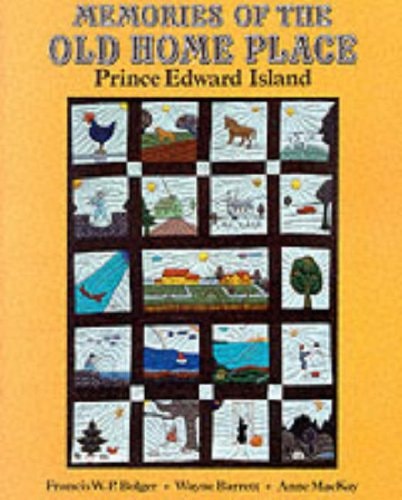
To its inhabitants, Prince Edward Island is not so much a place as a special way of life. Throughout the Island's history, Islanders have planted their roots deep in the undulating, verdant countryside. Indeed, for 200 years the family farm tradition in this 'Million Acre Farm', this 'Garden of the Gulf', has been the backbone of PEI society, reflecting in the Island's political, social, and cultural institutions. Agriculture has dominated the island, and even its other major industries, such as fishing, shipbuilding, fox farming, and indigenous manufacturing, have always been marked by an unmistakably rural character, as have the self-sufficient villages with their churches, schools, community halls, and small businesses; the larger towns; and Charlottetown, the capital city. While modern technology and political centralization have dictated radical changes in the traditional agricultural milieu, there remains on part of most Islanders a determination to preserve their Island's pastoral serenity. Wayne Barrett, Anne MacKay, and Francis W. P. Bolger portray in word and picture the rich heritage that is Prince Edward Island's history and its way of life.
Menrva's Summary
THE THESIS
This work investigates the historical and cultural evolution of Prince Edward Island, questioning how a distinct rural identity has been maintained amidst the pressures of modernization. The authors, including historian Francis W. L. Bolger, synthesize archival research and visual documentation to argue that the Island's 'Million Acre Farm' heritage serves as the foundational pillar for its political, social, and economic institutions. By examining the transition from traditional agrarian life to a centralized modern state, the text illustrates the persistent tension between progress and the preservation of pastoral serenity.
THE SCOPE MAP
What You Will Find
- Historical analysis of the agricultural, fishing, and shipbuilding industries on Prince Edward Island.
- Documentation of the social infrastructure including village schools, churches, and community halls.
- Visual and textual records of the Island's cultural heritage and rural character.
- Examination of the impact of political centralization and modern technology on traditional Island life.
THE AUTHORITY PERSPECTIVE
Experts recognize this volume as a comprehensive visual and historical survey of Prince Edward Island's development. Readers frequently note the accessible prose style, which effectively balances academic historical context with a descriptive appreciation of the region's unique cultural landscape.
Page Count:
96
Publication Date:
2000-02-24
Publisher:
OUP Canada
ISBN-10:
0195415116
ISBN-13:
9780195415117
History
Geography
Sociology
Agriculture
Americas
Canada
Community Tags
Similar Books