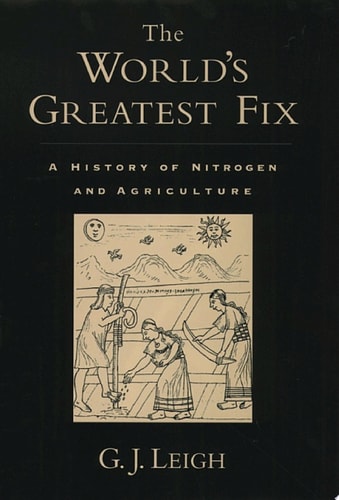
The World's Greatest Fix: A History of Nitrogen and Agriculture
0
0
As an Amazon Associate and affiliate partner, Menrva Books earns from qualifying purchases. Learn more
Author Description
In the tradition of Jared Diamond's Guns, Germs, and Steel, this gives the very early history of how human ingenuity overcame the risk of famine through productive agriculture. Starting with a layman's guide to the chemistry of nitrogen fixation, the book goes on to show how humans emerged from nomadic lifestyles and began developing towns and settlements. When they for the first time began planting the same fields year after year, they noticed quickly the need to ensure soil fertility. But how? The method they came up with is still in use to this day.
Menrva's Summary
THE THESIS
This book investigates the historical and scientific evolution of nitrogen fixation as the primary driver for human agricultural productivity and the development of settled civilizations. G. J. Leigh, a chemist, utilizes his technical background to bridge the gap between molecular science and human history. He argues that the mastery of soil fertility was the fundamental prerequisite for the transition from nomadic existence to the establishment of permanent urban centers and complex societies.
THE SCOPE MAP
What You Will Find
- A foundational explanation of nitrogen chemistry and its role in plant biology
- Historical analysis of early agricultural practices and soil management techniques
- The progression of human settlement patterns linked to food security
Scope Limits
- The text does not provide an exhaustive modern analysis of industrial synthetic fertilizers
- It focuses primarily on the historical and chemical origins rather than contemporary policy debates
THE AUTHORITY PERSPECTIVE
Experts recognize this work as a clear, accessible synthesis of chemical history for a general audience. Readers frequently note that the prose balances technical scientific concepts with historical narrative effectively, making it a useful resource for those interested in the intersection of science and human development.
Page Count:
254
Publication Date:
2004-01-01
Publisher:
Oxford University Press
ISBN-10:
0190290153
ISBN-13:
9780190290153
Science
History
Technology
Earth Sciences
Chemistry
Environmental History
Agriculture
Community Tags
Similar Books