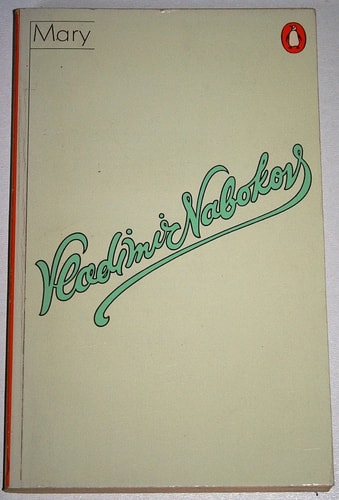
Mary
0
0
As an Amazon Associate and affiliate partner, Menrva Books earns from qualifying purchases. Learn more
Author Description
In a Berlin rooming house filled with an assortment of serio-comic Russian émigrés, Lev Ganin, a vigorous young officer poised between his past and his future, relives his first love affair. His memories of Mary are suffused with the freshness of youth and the idyllic ambience of pre-revolutionary Russia. In stark contrast is the decidedly unappealing boarder living in the room next to Ganin’s, who, he discovers, is Mary’s husband, temporarily separated from her by the Revolution but expecting her imminent arrival from Russia.“Nabokov writes prose the only way it should be written, that is, ecstatically.” —John Updike
Menrva's Summary
THE PULSE
Lev Ganin, a Russian émigré living in Berlin, finds his present reality disrupted when he learns that the husband of his first love, Mary, is a fellow boarder in his rooming house. Ganin occupies a space of transition, caught between the mundane, claustrophobic atmosphere of his exile and the vivid, idealized recollections of his youth in pre-revolutionary Russia. As he anticipates Mary's arrival, he navigates the tension between his romanticized memory and the stark, unappealing reality of her current husband. The narrative framework utilizes a blend of third-person perspective and deep, immersive interiority to contrast the stagnation of the émigré experience with the fluidity of memory.
INSIDE THE PAGES
- Exploration of the psychological divide between memory and reality
- Vivid, sensory-rich descriptions of pre-revolutionary Russian landscapes
- Satirical characterizations of the eccentric residents in the Berlin boarding house
- Themes of exile, displacement, and the loss of cultural identity
- Non-linear narrative structure shifting between past and present
- Focus on the internal development of the protagonist rather than external action
- Precise, lyrical prose style characteristic of early Nabokov
- Examination of the romanticization of the past as a coping mechanism
THE COLLECTIVE ECHO
Readers and critics frequently highlight this work as a foundational text for understanding the author's stylistic evolution and thematic preoccupations. Discussion often centers on the sharp contrast between the drab, claustrophobic setting of the Berlin boarding house and the luminous, idealized memories of the protagonist's youth. Many observers note that the novel functions as a meditation on the nature of nostalgia and the inevitable disappointment that accompanies the collision of memory with reality. The pacing is deliberate, prioritizing internal reflection and atmospheric detail over traditional plot progression. Readers often appreciate the subtle irony present in the character dynamics, which prevents the narrative from becoming purely sentimental.
Page Count:
112
Publication Date:
1973-01-01
Publisher:
Penguin Book, 1973, Great Britain.
ISBN-10:
0140036911
ISBN-13:
9780140036916
Romance
Literary Fiction
Coming of Age
Russian
classic
Contemporary